
A partner handed Evan Scharf a $350 a month bookkeeping engagement. He took it to prove a point. That partner sent him a $3,500 client, that client's CFO told a friend, and eight years later one of those referrals was billing $30,000 a month. More than 400 clients later, not one has come from an advertisement.
On this episode of Mind Your Business, Yitzchok Saftlas talks with Evan Scharf, CPA, Founder and CEO of CedarRock Advisory Group, about financial storytelling and why a number on a page is worth nothing until someone can tell you what it means.
Evan shares why he walked out of a Deloitte job interview after twenty minutes, the accounts receivable mistake that leaves profitable businesses short on cash, what a bank is actually evaluating when you apply for a loan, and what his team does every single time a vendor's wire instructions change. He breaks down the real difference between a bookkeeper, a controller, and a CFO, and which one most owners actually need. And for the executive directors of nonprofits and schools, he explains why the hours you spend on payroll and bill pay are the most expensive hours in your organization.
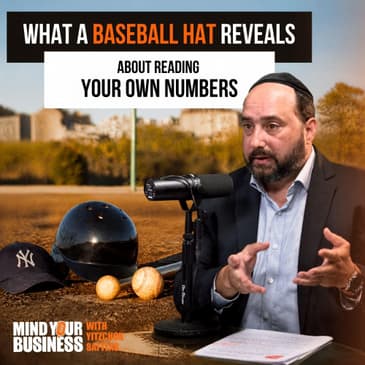
Plus the story of a baseball hat in Colorado that says everything about how people misread numbers.
Evan Scharf, CPA, Founder and CEO, CedarRock Advisory Group
Website: https://cedarrockadvisory.com
Phone: 516-666-9249 ext. 101
Mind Your Business is hosted by Yitzchok Saftlas, CEO of Bottom Line Marketing Group. New episodes weekly at www.mybradio.com
[00:00:00] I Need To Sign Every Check In The Company. No, you don't. You want to sign every check in the company. It gives you some type of comfort. But the truth of the matter is, you're wasting time. If you are really good at it, then go be an accountant. If you're looking to grow a business, this is one of the things that you should probably not be doing. I hear these crazy stories where the CFO could get an email from the CEO, hi, I need you to wire over a million dollars. And you're looking at the email, it's the CEO's email address.
[00:00:26] It's a real different world and you need to take a little bit more time. It may be annoying, but wiring an extra $100,000 out to somebody's account is a little bit more. AI is not going to take out humans, but it may take out humans who don't use AI. Financial Storytelling. What? Financial Storytelling? Excel, Spreadsheets. On this edition of Mind Your Business, I'll be catching up with Evan Scharf of CedarRock Advisory Group.
[00:00:53] Yes, we'll be talking about financial storytelling and all the aspects that one needs to be mindful of in running a business day in and day out. Evan! It's Rock! It's finally happening. We're getting together. I'm catching up on this edition of Mind Your Business with Evan Scharf, CPA, founder and CEO of CedarRock Advisory Group,
[00:01:22] an outsourced accounting firm delivering bookkeeping, controller and fractional CFO services to businesses and nonprofits nationwide. Evan, we wanted to do this for a while. It's finally happening. Yes. Very excited. Well, let's go back. You were at the big four. You were at Deloitte. Right. And now you're at, you're at, you founded and you're leading CedarRock. Talk about the early days.
[00:01:49] And by the way, this is also important. You know why? Because every kid today, yeah, by 22 I'll make my first 10 million and by 25 I'll be a billionaire. You know, like there's a, there's a, you know, there's a path. Talk about it. So I started my, I went to YU and there's a big push to try obviously getting to the professional services. I went, I majored in accounting. I wasn't really sure what I wanted to do. I did quite well. And I got an opportunity to work at Deloitte.
[00:02:19] I actually deferred for a couple of years cause I wanted to learn a little bit, but then I started at Deloitte and I didn't really know what I was doing. Like most people, when they go into a big four, do you want to go into tax? Do you want to audit? You speak to a couple of people. I had a very good experience there, but just to put it in perspective, I started at Deloitte, like the beginning of November. I got married the end of December. What year is this? This is in 2003. Okay. Okay. So right after 9-11, downtown is rebuilding.
[00:02:49] Downtown is rebuilding. The office was in the world financial center, which is literally right across from the world trade center. That's right. It was a real pain in the neck to get there because I lived in Far Rockaway at the time. I have to take the railroad, Atlantic Avenue or Slap Bush or 35th. Then you have to take a subway for 25 minutes. Then when you get to Fulton Street or Wall Street, you have to walk across. Slip hike. Then you have to go to the building. Either underground or above ground. Yeah, but to cross the West Side Highway, it's a wind tunnel. It was very cold in the winter.
[00:03:17] It was the commute was very taxing. It was like an hour and a half each way. The challenge was I got married at the end of December and then busy season started a month later. Right? So there was no like shudder, shudder, shudder. Yeah, none of that stuff. But Bar HaShem, you're happily married. Bar HaShem. Bar HaShem. Great. Asha's Kyle, six beautiful kids, boys. Um, but in the beginning it was, it was quite hard in taxing.
[00:03:42] Um, I was an audit and primarily I didn't spend that much time in the office because I was at one of our clients on the corner of water and Wall Street. Okay. But literally on Wall Street, it was a broker dealer. Um, and we had a small group and it was, um, very respectful, very good. We had one, two people that actually came from Turkey and my manager Beth, she was like unbelievable, very supportive, you know, having to leave on a Friday at two o'clock or 1 30. Right.
[00:04:11] Could be a little bit challenging when people are staying till 1 AM in the morning because it's busy season, et cetera. Um, and they were extremely respectful. In fact, the partner that was on that, uh, engagement. So he would pop in once in a while and we were sitting together and, um, you know, one of my teachers, professors in NYU was always, he always told us, he's like, you know, go into the workplace. There are people that should wear a yarmulke and there are people that shouldn't.
[00:04:38] I mean, you have to recognize that you could use it as a crown on your head to be like, everybody's looking at you differently. So you really have to make that. It's not like whether it's right or wrong. You have to like go the extra mile. Why am I saying this? Cause this partner came in and he used, uh, inappropriate language. Let's call it, or a language that wasn't fitting. And I was literally a first year guy and there were a bunch of people in the room and he looks to me and he says, Evan, I apologize for using such language. That's that. That's so special.
[00:05:07] So obviously you gave the impression. I, again, it was whatever, whatever it was, but it was, it was like an aha moment for me. And it's really like the first time when you're not in like your sheltered environment, you're dealing with people from different countries, nationalities and, uh, just different perspectives. Whether a guy grew up in Omaha, Nebraska, or he grew up in London or an anchor or wherever. And it's really, really important that you have to recognize that you're not only representing yourself, but you're actually representing everybody. Yeah.
[00:05:35] So it puts a big sense of like responsibility on people. Like, wait a second. And people really should have it. And then unfortunately you have people that shouldn't necessarily be wearing the Yamaha because they're not really behaving that way. Um, so it's, it's, it's really important thing that people need to realize in any time you interact with anybody, um, that you don't only represent yourself. Yeah. So I was at Deloitte. I was there for two and a half, almost three years. Uh, it was a great experience, but at a certain time I felt like I needed to move on.
[00:06:03] Someone from the neighborhood recommended that I recruited me to, uh, or he really wanted me to join his team. It wasn't accounting related, but I look at the years of Deloitte as being difficult, yet enjoyable to some degree, because it did. It gave me a lot of exposure. It was a very supportive, uh, environment. It gave me a lot of soft skills.
[00:06:22] I would say, um, you know, when you work for a large accounting firm, you don't really get to see the whole gamut of what financial statements are because you really focused on just a portion and until you're there for a year or two, you don't even realize what you're really doing. So when people want to get like experience in the accounting field, if you know, again, there's so many different variables, but the smaller clients. You work on the more you get to see, depending on where you want your career to go.
[00:06:48] Um, but it was a very, it was, I look at those years as, as challenging, but it was, uh, like I said, somewhat enjoyable. Now we're going to obviously spend some time talking about what Cedar Rock does day in and day out, but maybe fast forward. You started, what was the name of the company 15 years ago when you started, what ultimately is now Cedar Rock advisory group. Right. So after I left the Lord, I went to another company. It was in the financial services field. We dealt with a lot of public companies, Edgar SEC filing.
[00:07:18] And then I was tagged with, um, heading up something that had different divisions that I was responsible for and what was called XBRL. I don't need to get into it, but, um, and then about 16 years ago, it was after 2009. The job market was horrible. Um, law firms were closing. Like it wasn't really a great situation. And, um, I was sitting in my office and I'm like, I need to do something more. So I'm a CPA. I actually went back to Deloitte for an interview.
[00:07:47] I walked in the building and I'm like, guys, I'm sorry. I just don't want to do this again. And I, I sat with them for like 20 minutes and I'm like, I'm sorry. Yeah. I was like, I'm sorry. I just, yeah, I'm going to be honest with you. I just, it's not going to work. Um, but then I decided I was thinking and I'm like, I'm not the most creative person in terms of like business. Although I do happen to paint, but like, we'll leave that aside for a second. Um, and I felt like what's lacking in the market.
[00:08:14] So at the time I realized like there are CPAs or CPA firms that are probably getting garbage from their clients. And if they're doing a tax return or they're doing an audit and they're frustrated because they're not getting everything on that silver platter. And the client may not have the ability. They may not have the right staff or for whatever reason. So there's a lose, lose scenario in the market. Meaning the CPA doesn't want to do those things. Shouldn't have to do those things. Doesn't have the resource to do those things yet. They need to do it. That's not good for their business. Right.
[00:08:44] Whether they charge for it or not. If they do charge for it, the client is losing because they're paying more for work that they shouldn't have to pay that rate for. Right. It's opportunity cost. So, um, I said, okay, we'll start this business and we'll sort of be the liaison. We'll be in between. And I reached out again. I was still working at the other company for about, this is like five years prior, but you know, during my off break or whatever, maybe I started developing relationships first within the community.
[00:09:11] And then I started expanding it and I started telling people what we were doing. You get one client or another client. And, but it's very important to realize, like at the outset of me running this business, I made a decision, which is, I don't want to do the actual client work. So I always hired people to do it. In the beginning, whether I made money or lost money was irrelevant. I just wanted to sort of get the reps in.
[00:09:38] I just wanted to like, does, is this like proof of concept? Is this going to work? Is it not going to work? How can I make it work? And I was really living in a couple of different worlds at the same time while I was trying to build this, this business. Okay, but let's just fast forward. Now, today, summer of 2026, you're servicing 400 clients. Okay.
[00:10:03] You know, the, you know, you talked about that you, you yourself technically didn't, you said you had a reservation about doing the work, but you hired the greatest team, you know, possible in order to do that work. You're servicing 400 people, 400 clients. That's, that's a world. I'm saying that that's a tremendous, you know, talk about that. There's this, I don't want to say there's a gap, but there's like, there's a story here. Okay.
[00:10:28] The story is that you need to start slow and make sure that you're confident that you have an offering that's going to resonate with people and people are going to understand and value. Okay. So let's just go back for the market for a second and then I'll, I'll fast forward. Yeah. So at that time, there's something called client accounting services, which basically includes bookkeeping controller, some CFO work. Yes, yes, no, no. But at the end of the day, there was that lose, lose in the market. When I started this and I was going to firms like with them, Eisner Ramp or Cohn Resnick.
[00:10:57] They didn't really have CBiz, Markham. They didn't have these departments in their firms. What's happened over time is they all opened up these client accounting service divisions of their company. So in fact, there's a story with one of the firms, which maybe we'll get to a little bit later about how I was approached and we had a very successful joint venture with one of them.
[00:11:20] But it was very important that, you know, what they call Caz is client accounting services developed over time. And that solidified for me that, hey, this is really a business that people want and they seek. So the way it worked is it was very important for me to hire the right people. Yeah. Okay. And the success of our business is hiring the right people. And I'm very proud to say that everybody that works within the company is an absolute superstar.
[00:11:49] I would joke with clients. I'm like, it's going to be very hard for you to find anybody because I have the best people. Okay. But the ability to work with multiple clients is a combination of the right people, the right systems, the right procedures, the right encouragement and the right culture and environment that all come together in order to get to deliver that service to the client and grow. I'm not going to say it was easy.
[00:12:14] It does take a lot of time to build that, but it's all about one step at a time, building a relationship, having people be confident like you want to work with you. At the end of the day, business is about building relationships. And once you, I would always end the calls, like give us an opportunity to impress you with our service. That's right. I'll just give you, just illustrate one example of that. There was a firm that we work with. I met this partner, followed up with him. I'm like, just give me something. And he gave me a very, very small opportunity.
[00:12:44] We were, it was like $350 a month. Okay. We took it. I wanted him to get impressed with our service. Mm-hmm. We did a good job. And then he gave us another client. And that client was $3,500 a month. See that. And that client, the person that was a CFO at that company, that second company told his friend about us. His friend brought us into his startup company. That startup company in the apparel business, we started working with them.
[00:13:14] It was a $4,000 a month client. They were with us for eight years. And the last few years of that engagement, our monthly billing with that one client was $30,000 a month. And that's what's beautiful about this is it started with the $350. Exactly. So that was how, that was my method. When I say, we just wanted to do it. We just wanted to do it and get our reps in.
[00:13:36] That's just one example of starting small, doing a good job with whatever you're given, building that relationship, getting that sense of comfort. And then that opens up doors in ways that you wouldn't have anticipated. Now, I've heard you use this term in the past, financial storytelling. I loved when you said that. No, no, because at the end of the day, you know, we understand telling stories. That's how Shem wired us. We want to hear the story. Okay.
[00:14:05] And, but you're dealing with, you know, finance. How exciting is it to work with a calculator all day? So talk about it. So first of all, I don't work with a calculator all day. Okay. But, and it may be exciting for some people. Okay. But, but the truth of the matter is, you know, everything trickles down to finances. Yeah.
[00:14:23] Whether somebody is buying a new product or whether there are tariffs or whether it's marketing expenses or whether it's labor costs, any decision that a business makes is going to have a financial. Component. Yeah. A consequence. A consequence is the right word. That will eventually trickle down. Now there are certain KPIs, key performance indicators that you may be tracking or may not be tracking or not.
[00:14:49] Maybe not even be aware of that are important to track. Right. I'm going to get to that. Right. Yeah. So, um, if you're a business owner or you're responsible for the financial health of the company, sometimes it could be kind of exciting to recognize when you do look analytically at what transpired, what did I anticipate that was supposed to happen? Why did it happen? Why did it happen? The numbers tell a story. And our job, one of our jobs, we have a few.
[00:15:17] One of them is to give the business owner or the decision maker, the financial story that they need to then make the decisions within their business. I don't own their business. It's their business. They have to make the decisions that they want, but I want to give them that story that is going to give them the information that they need to make the right decision. Now, there are many strategic ways. There are many manipulative ways, although manipulative is a hard word.
[00:15:47] I don't really mean it that way, but they're creative. That's good. There are many creative ways that a person can tell different stories with the same numbers. And, um, you have to know which one is going to give you the hard truth, which is not going to give you some fantasy about what's actually happening. Right. Um, but again, telling that story, it's all about, it's not just the number. It's the story behind the number and how it trickles down.
[00:16:14] Now, Evan, every business owner is wearing many hats as the expression goes, right? CEO, chief, chief everything officer, right? CEO. Now, as it relates to the financial portion of business, you touched on this a moment ago. He's agonizing over, let's, as it relates to the finances, you know, I'm doing the books at night instead of, you know, having someone, you know, look it over. Or I have a book, I have a bookkeeper, right?
[00:16:41] But who's checking the work or my accountant only shows up at tax time. These are, these are things that are running through a CEO, a business owner, entrepreneur. It's running through their mind. How do you, I mean, that that's, I guess that's where Cedar Rock comes in. Yeah, those are main points that we hear from potential clients. I mean, we address multiple different scenarios. That would be one. Okay. But let's talk about the example you gave, right?
[00:17:09] So let's talk, you have an executive, whether it's the CEO, whether it's the founder or the CFO, whatever, and they find themselves doing things that they either don't want to do or shouldn't do. And I'll explain the difference between those two in a second. And then there's something called opportunity cost, right? You're really good at what you do. Do what you're really good at doing. You should not be good at doing the accounting function of your business. If you are really good at it, then go be an accountant.
[00:17:38] Okay. So obviously you should be doing something else. And if you're looking to grow a business or grow a team or manage a business, this is one of the things that you should probably not be doing. Yes. You can't put your head in the sand. You need to know what the numbers are, right? But you should not be staying up late at night to run your books or review. It's just, it's a waste of your energy and time because you don't need to be the one to do it. Now you may like doing it.
[00:18:04] And this we find a lot when we're dealing with scenarios where they have an in-house person. Okay. One of the main things that we help out with is the efficiency. Okay. So we want to look at what the accounts receivable cycle is, the accounts payable cycle, the month and close cycle. And we want to find ways to make the process efficient. You may have a business owner. You may have someone in your office that's not incentivized to do things efficiently.
[00:18:33] I'm going to tell you a story. Okay. Please. One of the first clients we ever got, he had a person in his office. I think he was paying, I don't know the numbers, but let's assume it was $20 an hour. And she was coming in four hours a day. I told him, I'm going to cut your cost in half. I didn't know whether I would cut his cost in half. I don't know if I was going to make money or lose money. I mean, his bill was going to be cutting his cost in half. Okay.
[00:18:56] What happened over time was my margin was 100%, which means that I was paying my person the same rate he was paying his person. Yet what came out that for every one hour my person was working, we were able to do the work of his person that took four hours. I'm like, wait a second. This doesn't make sense. What's going on? Right.
[00:19:15] And then I realized there were a couple of factors involved and it really taught me, you know, it was like an aha moment that I do see, you know, and this was many years ago, you know, that is pervasive in many, many different scenarios. That person that he had in his office was paid to show up. She wasn't paid to produce. So when you go in to an office and I have to be here from one o'clock to five o'clock from nine to five, whatever the hours are, there's something called Parkinson's law. Okay.
[00:19:44] Where you solve a problem in the amount of time given to solve the problem. If you have, well, people don't get out of escape rooms all the time, but the point is in the back of your mind, you know, I'm going to be here for a certain period of time. So I have no incentive to be efficient. In fact, I have a negative incentive to be efficient because then if I'm only here two hours, I only get paid for two hours. Right. So, um, I didn't have like an octopus with like eight arms and legs with eight computers doing the work. It was just like, what's the mindset.
[00:20:14] And then that flows into something that I say all the time to people. It's extremely important to the culture of our business and our company and how we express ourselves or how we communicate with our clients. And that is, we're not an accounting firm. We don't do tax. We don't do audit. We're a customer service company that happens to do accounting. Okay.
[00:20:35] My deliverable to you is not necessarily, not necessarily that financial statement or that financial story, but it's also that, you know, that your books are, it's the peace of mind that you know, that your books are complete, accurate, timely done efficiently. And that you can rely on them because honestly, everybody's pulled in so many different directions. You're talking about the CEO, the founder.
[00:20:59] He doesn't even know where to turn sometimes, but to know that I liken it to like, you know, putting money in the soda machine, you put the money in, make sure you get paid up front, right? Put the money in first and then you get your cold soda. I just want the cold soda as the business owner. I don't really need to know if I trust the soda machine is going to get it to me, right? How it's all working. I just know that it's, it's good. And that's what I want.
[00:21:23] So when you are running a business, just to go back to your question, you should not want to do this. Right. If you do want to do this, sometimes you are blinding yourself and it's your comfort zone maybe, but that's not what your core competency should be. And a lot of times you find people, they curl back into what they feel most comfortable with. They're afraid of change.
[00:21:47] And it gives them the impression that they're working so hard and doing all these things, but they're not working smartly by doing things they shouldn't do. They're not growing it. Right. And then they're working in the business that I'm on the business. Right. Now for a living, by the way, we're speaking with Evan Scharf, founder and CEO of Cedar Rock Advisory Group. You walk into a company's books for a living.
[00:22:10] If I, I'm not asking you for anything confidential, obviously, but like, what is like one mistake that you just see over and over again? You're like, why does everyone make that mistake? Okay. I'll mention one. I think accounts receivable and the process of invoicing, getting paid Tommy for the invoicing, what the terms are something that every company needs to take a look at. Okay.
[00:22:37] Um, I say, you know, cash, you could have a great business, but not have cash. Mm. Cash is sometimes a time issue. So for example, let's say I sell shirts. Mm. Okay. And I have to put a 50% deposit with the manufacturer in China. By the time it comes three months later or four months later, and then it gets sold to a retailer.
[00:23:01] And then the retailer has 60 to 90 to 180 days to pay it, whatever the terms are, if they actually pay. I just had a huge outlay of cash for six, seven months. So many months earlier. Yeah. And I'm not getting that cash. So people have to use factors or they have to borrow money or they're paying money on that money. They are. Um, but if someone magically gave them here's $10 million, you don't have to worry about that. They would have a great business because their margins are there. It's just that cash is a little bit tight and that creates a lot of aggravation for people.
[00:23:32] So one of the main things that we'll do when we come in, if there is a cashflow crunch is we will review their AR process. And we will take a look at like other opportunities to get payments upfront. Like that's huge. It's becoming more and more accepted. I know in our business, like we're doing work for you in the month of June or whatever it is, we're getting paid June 1st. I don't have to be the bank. Right. To get paid after and chase whatever. This is just the way it is. Right. Just like when you pay for your Gmail or you pay for whatever. That's it.
[00:24:01] That's the way it is. Come right. So we really look for opportunities. I think that's a big mistake that companies make because, um, I think more and more companies are moving in the direction of getting paid upfront or having much, much more stricter AR controls. Um, that, that's one thing that I think we see a lot that I would highly recommend people pay a little more attention to. So Evan, this leads to my next question. A business needs capital, right? Okay. Let's say we're talking about a company that is now growing. Okay.
[00:24:31] And, you know, they, they go to their bank. They want a loan 50,000, a hundred thousand, half a million, whatever it is that they're, they're, they're, and they apply for the loan and either they get rejected or comes back for half the amount that they really need. And from your experience, is it a cashflow issue?
[00:24:50] Is it a cashflow issue? Right. Right. So they're interested in lending? Right. So they're, they want to lend to people that they think are going to be able to pay it back. Right. Um, so obviously building relationships is very important. Um, the type of bank that you go to obviously makes a difference. Okay.
[00:25:19] Um, some people prefer working with smaller banks, some with larger banks, some are more rigid, some are more fluid, right? It really, that you have to figure out, you know, what's going to be the best for your business. But I do think that people mistake, like I need to have, let's say positive cashflow for the bank to lend me money. If let's say you have a company that's putting a lot of money in research and development. Okay. Right. And they see that, Hey, you're responsible. You have a plan, whatever you said you were going to do over the last year, you've actually accomplished.
[00:25:48] And you can tell them that story that is convincing true to the best of your knowledge and that they sort of go on that vision journey with you. They're going to make money off you and that's what they want. So it's not just about like, you're coming to them for money to use. So if they see that you're responsible and that your books are in order and things are clean and you take things seriously and you really have a plan. So even though today. Right.
[00:26:17] Because I'm saying your example is a great example because R and D it could be six months, a year, two years till you're making back your money. Right. So if you show them, it's like going on like a road trip with a pitch deck, right? You're going around, you're telling them that story. Now, some people make it, some people don't. But when it comes to the banking, we actually, we have like these banking packages that we've put together for people that sort of shifts the story industry now.
[00:26:43] Like there's so many different factors that go into it, but people shouldn't be afraid to go to a bank just because I'm not cash positive or just because my revenues are pre revenue. Like if you have a convincing story that makes sense and it's believable and, you know, done the right way, you should be okay. And look how you're that the books are in order. I mean, you have to show a hundred percent. You can't walk in there being sloppy. Yeah.
[00:27:10] So especially if you say, Oh, like why do people go to big four firms? Like in general for that audit? I mean, there are many reasons, but one main reason is we use Deloitte. So automatically when you hear someone use Deloitte or PWC, you're like, Oh, they're here. Do they need to use those firms all the time? No, but it's sort of like, Oh, these people do my books. Not that we're like Deloitte or anything like that, but, but it's sort of because I have someone outsource. I have a CPA.
[00:27:36] I have somebody that's managing my stuff that automatically puts you in a new category with the banker. Cause he's speaking to other people that don't have that. Let's talk about we're in 2026 fraud, phishing. Some of these things have gotten frighteningly good, not, not good, but I'm saying, but the accurate or however you want to.
[00:27:58] Uh, you know, now you're talk about in terms of, you know, you hear these crazy stories where, where, where, where the CFO could, could get an email from the CEO. Hi, I need you to wire over a million dollars. Please make sure it's in my account before 9am. And, and, and wait, and you're looking at the email. It's, it's, it's, it's the CEO's email address. Like, or I scared to think about, you know, with voice recognition software and everything and like where this is going.
[00:28:27] And how do you handle it and advise your clients to say, okay, here are some of best practices in order to make sure that has a sham, you don't become a story. Very, very good question. Extremely relevant. Um, we get bombarded with these things more often than we'd like. Um, so one of the things that we do internally is we constantly have training. Um, we partner with an IT company. Okay.
[00:28:54] And they randomly send out the suspicious emails to my team to see if they act on it or not. Okay. Wow. So bait. Yeah. And we want to make sure. No, yes. It's very smart. We've had situations similar to the one that you described and everything's about self reflection, improving a process. As new challenges come up, how are we going to deal with it?
[00:29:23] So right now in our company, like we're responsible for bill pay. Like we pay bills for many, many of our clients. So one of the things that we do anytime that someone has a new request for, so we have a procedure that we put in place. This is the AP procedure. It's excellent. So, but when anything comes out of the box, let's say the CEO says, Oh, I need you to pay it. It didn't go through the process. He's the CEO. Anytime that there's new wire information, we need to call the person at the company that we know.
[00:29:53] Right. Not a random person. Right. I see that this came in. Can you please verify? And not even email talking about, Oh, you have to figure the phone. I have to hear your voice. I have to hear your voice. I have to be the one to call because I know what number I'm dialing as opposed to you call me because a random person can call and you may not know who it is. Right. So, we've definitely buttoned up these types of procedures, which weren't necessarily there 10 years ago or five years ago, but it's a real different world.
[00:30:19] And we've definitely learned that we need to, it may take a little bit more time. It may be annoying, but wiring an extra $100,000 out to somebody's account is a little bit more annoying. Now you have sometimes, let's just talk about, you know, a small business that's growing. And one guy says, yeah, my business, they're bragging about the top line. It's a $5 million business, it's a $20 million business, you know, but, you know, having, you know,
[00:30:45] Vorach Hashem, you know, having a relationship with you for a number of months now, I'm beginning, you know, to hear clearly that, you know, don't get fooled by the numbers. We're a $5 million business, $20 million business, but there's a story, financial storytelling. You know, what type of financial dashboard should a CEO, the one at the top, be studying and saying, okay, all right, these are the, now again, if you talk about a dashboard in the air, in a cockpit, right?
[00:31:13] So a pilot knows everything, but there are a couple of, I don't know what they are, right? I'm Samich on the pilot when I fly. Right. But there's two or three very, very key, how close you are to the ground, how fast you're going, whatever. What are the two, three key metrics that you're running a business, don't lose sight of this? Okay. So yes, sometimes people get fooled by what the top line revenue is.
[00:31:36] Now, there are scenarios where that's extremely important and the profitability of the company is not as important. Uh huh. So for example, if you know, someone wants to get multiples on their revenue and they want to be able to sell it to PE, there are certain obviously KPIs that people look at, but some people do like to look at what the top line revenue is and they feel that they could make inroads in the operational costs.
[00:32:03] So, but overall, the overwhelming majority of situations is yeah. If I'm selling cars and each car is an average of $30,000 and I sell two different types of cars, yet my revenues are going to be higher than the guy who's selling pens. Right. Right. So the top line revenue may not matter as much or, you know, consumer products companies that have inventory, naturally their revenue, their high, you know, their revenue number is going to be higher than let's say a service business. Right.
[00:32:31] And the profit margin of each one of those businesses is very, very different. Right. So it depends why the person is saying that if they just want to feel good about themselves, I have $100 million business. Okay. It could be great. That's wonderful. But does that do anything for you? I mean, it may, but at the end of the day, to see how healthy your business is, you need to take a look at like, what's my gross profit margin? What's my profit margin at the end of the day? What are my labor costs? What are my sunk costs? If there are any, what is my opportunity cost is a big thing that people don't realize.
[00:33:01] Like you're putting certain efforts into A when you really should be doing B. Obviously people have to know what their break even point is. Like when do they become profitable? Then there are different like KPIs. You may want to look at different geographies of like where I'm doing better, where am I not doing better? Why you want to make a look at sales metrics and marketing? Am I getting my ROI on different things that I'm doing? So there's so many different KPIs depending on the business, but I would say obviously people have to know what the cash position is. Okay.
[00:33:27] You have to have like a 13 week cashflow projection because if cash is a problem, you want to be able to make payroll. People are going to want to know like, when do I open up a new location? When do I hire a new employee? All these types of thing are extremely important for the growth of a business. But obviously you have to know what your costs are, what your profit margin is, where you want it to be. And then you go into discussions about like, well, what if I raise my prices 10% and I lost 5% of my clients? Would I be better ahead or not?
[00:33:56] And these are analyses that people can do based on the numbers that they receive and where they want to go. Now, if I may, I'm not going to put you on the spot and ask you how many CEOs really know what's going on with the books. I don't know. Okay. The question is how many people want to know about the books also. But at the end of the day, especially if a company is going to scale, they're going to have to have some type, some type of idea of the financial status, financial state of the company.
[00:34:23] They call you up, talk about where Cedar Rock jumped and day in and day out and make, make believe, you know, I'm calling up. So intro call the client. The first thing is you got to listen. Listen, it's very important to sort of ask the client where they're at. Right. What's bothering them? What's not bothering them? What's going well? What's not going well? Why are we reaching out? Why are we speaking? Right. Sometimes it's coming from an external source. Either they want to get money from the bank or their CPA firm is telling them, hey, you need to get somebody in here to do it.
[00:34:52] Your internal staff is not working for you. You're not giving me what I need. You're making my job more difficult. Sometimes there's an epiphany and the guy's like, wait a second. I need to know what's going on for myself. We're not so interested in if someone calls and say, oh, I need to do my taxes. Can you clean up my books? That's not really what we're looking for. We're looking for an ongoing monthly maintenance relationship with the client, educating them about what's going on.
[00:35:15] We want someone that is interested in what we have to offer and is, you know, Sims used to have a thing. Our best consumer is an educated consumer. What is it? I forgot exactly what it was. An educated consumer is our best customer. Something like that, right? I went to Cy Sims, but whatever. It's not like they have it on the wall anywhere. But the bottom line is like, we want people to be educated. If they're not, we want to be able to educate them because it will help them in their business as they scale and as they grow. So that's what I'm looking for.
[00:35:40] I mean, what's the actual benefit that a client of Cedar Rock will receive by being a client of Cedar Rock? Okay. So number one. So we're going to go through the AR cycle, accounts receivable cycle. We'll go through the accounts payable cycle. We'll go through the month and cycle. We'll ask them what type of things, what KPIs, key performance indicators do you want to track? How are we going to get there? Is your stuff up to date? Is it not up to date? Is it being done efficiently? Is it not being done efficiently? What does your cash flow look like, right? And in the beginning of the process, we're going to ask all these questions.
[00:36:10] Get a sort of sense of where they are and then build a proposal about where they are. Now, I always tell people today, it may be A, B and C. Tomorrow, it may be D, E and F. We're very fluid to work with. The example I gave you before about the company that went from $4,000 a month to $30,000 a month. We had a great relationship with the CFO. He recognized, you guys know what you're doing. Why should I hire more people, fire more people, deal with more people? I deal with you. You're like that soda machine. It comes out.
[00:36:37] So, our job when we go into an engagement is to first listen, ask the client what they think they need. We'll make recommendations what we think we need. We're not haughty enough to go in and say, you need this and this. You know your business better than I do. I hope so, right? We're just coming in and we're saying what we feel based on, and when we work with people for a month, two months, three months, more things come to light and we're able to point more things out to them. And I said before that we're a customer service company.
[00:37:08] We don't have a black hole. You were assigned your account manager. Your account manager is with you. They learn who you are. You learn who they are. We become like an extension of their team. So, it's not like every three months you're being rotated from person to person. So, during that onboarding stage, just specifically how we work at Cedar Rock is we have a senior account manager that helps with the onboarding. Then the account manager comes on.
[00:37:34] That account manager is completely capable of running your account. But we understand that your business is like a train going down the tracks. Operationally, things just need to happen. And it's moving. So, let's say someone is out on vacation or maternity leave or whatever the situation may be. You still need that continuity of service. Right. So, that senior account manager would step in. And they're always behind the scenes. Now, the senior and the account manager actually have stand-ups that communicate constantly with each other.
[00:38:04] So, you as a client are comfortable enough that the senior is familiar with what's going on and can step in and is always there from the beginning to the end. Now, this only works if you have long-term clients and long-term employees. Yeah. One of my great people internally made a comment recently. And she said, you know, the sign of a great company is long-term clients, long-term employees. And we have both. And it's true.
[00:38:33] We have many clients that have been with us over 10 years. We have many employees that have been with us over 10 years, five years, six years, eight years. Now, if I may ask, because there are a wide range of viewers of the show and some are just newbies, right? You know, entrepreneurs getting started. How would you, in a very simple way, explain the difference between a bookkeeper, a controller, a CFO, a fractional CFO? Just, it's a basic question, but just explain. Okay. Very, very high level.
[00:39:02] So, let's start with the CFO seat. Okay? I think, unfortunately, there are many people out there that will call themselves a CFO, even though they're not. Okay? And the real CFOs that are going to do financial planning and analysis, doing mergers and acquisitions with people, like really, really, the high-end advisory stuff, really don't want to do the controller and the bookkeeping work. Okay?
[00:39:30] Now, at Cedar Rock, we don't do that high-end CFO work. About 25% of our business comes from those CFOs that want their stuff on a silver platter, just like the tax guy, just like the order guy at the front. Okay? Where you get into trouble is where someone is branding themselves as that CFO. They're not able to deliver. Like, again, we'll do like cash flow projections, budget to actual analysis, which is more than enough for many different companies.
[00:40:01] But you're going to have a lot of companies that feel they need it. I need a CFO. I need a CFO. You don't need a CFO. You need a controller. And what is the difference between the CFO and the controller? The CFO is someone who works on the books, not in the books. Okay? So they're getting a finalized report. This is the balance sheet. This is the P&L. This is the cash flow. These are everything. Mm-hmm. They're not working within the books to create the books of the company.
[00:40:29] The controller is in the books. The bookkeeper usually reports the controller is in the books. So that is how transactional, the month end close, putting everything together. But the way we look at it is CFO is more forward-looking, advisory, high-level type of stuff. Controller is what most people need that they don't even know exists or they're not familiar with that level. I think that's really where Cedar Rock really shines.
[00:40:56] And obviously, what comes along with that is the day-to-day AR, AP, putting procedures in place, making sure that they're followed, and actually implementing it. Thank you. Explained it well. Now let's talk about some key aspects of your team. Okay. Communication before technical skill. Okay? This is something that you've shared. Yeah.
[00:41:19] And I first want to hear about it, and then even if you could share, like, some of that, my understanding is that if someone, anyone on your team, first of all, has to have a minimum of five years experience? Yeah, they're out. Minimum. Okay. And you test them on their communication skills. Now, this is beautiful because, you know, I'm very into communication. And so often, I don't want to say, you know, people pull their hair out. Not going to, people are watching this. Okay.
[00:41:46] Not that Evan pulled his hair out on this, but at the end of the day, so you're like, punish them. They don't get it. Why don't you just talk to me? Explain it. Give it over. Why are you holding it in and getting everyone frustrated? Talk about the necessity for communication. And I could say even on, especially when you're dealing with numbers, which is not necessarily a communication thing per se, right? It's numbers. I'll send you a document.
[00:42:12] But why is communication at the core of your hiring process for Cedar? Communication skills are important both internally and externally. So when I spoke earlier about the idea that we frame ourselves as a customer service company that happens to do accounting, a lot of that is rooted in the communication and how we communicate with people. Okay. So there are a couple of ways that we do that.
[00:42:39] So you asked me about how do we test people on their communication skills and not actually asking you to share your secret sauce. I'll just give you an example of one of the things that we do because as a client, if you're in the customer service business and you don't communicate effectively, you're by definition not providing them that service. Okay. So we have to back up what we say when we mean we're a customer service company.
[00:43:07] But one thing I tell people is how frustrating is it when you get an email? Oh, he told her to send that report. I don't know who he is. I don't know who her is. I don't know what report you're talking about. And if people actually pay attention to it, you'll see so many emails back and forth where people are talking over each other. They don't know what they're referring to. The person obviously who sent the email, he told her to send that report, knows what they were saying.
[00:43:32] But the recipient on the other side of the table or the computer doesn't really know and it needs clarification and more clarification. Again, this is just an example. Yeah. We would send emails that say Jack told Jill to send the 1231-25 balance sheet or something like that. Right. Exactly.
[00:43:50] Because what happens is if I don't know what you're talking about, I mean, this happened years ago where someone asked for like a June 30th financial and we were scrambling because it was like July 2nd or something, whatever it was. But they really wanted the prior year. All they needed to do was two extra keystrokes. And everyone was spinning their wheels. Whatever it was, it's just like be clear. Now, internally, communication skills are also important. Try to answer the questions before they're even asked. Beautiful.
[00:44:18] One thing that we do with people is we give them test projects. And one of the parts of that test project is write an email to the client identifying all the things that you may have found as being an issue. It's also the style. Like if something's supposed to be three sentences and it's three paragraphs, that's not good. If something is supposed to be three sentences and it's three words, it's also not good. Right. So you really have to see. And some things, sometimes people are coachable, but other times they're just not and they just don't get it.
[00:44:48] And if it's not going to represent your company the way that you want it to, then it's not going to work. All right. Now let's go back to something that's so key. And this has to do with the, you shared with me your recent road trip with the family. Yeah. Numbers. Right? We even talked about it a little before. You know, I have a $5 million business, $20 million business. Okay. But sometimes I, I love the story that you shared with me, you know, before the show aired about it's our, this was our 2025th road trip.
[00:45:18] And then, but it really ties into your business. Right. Totally. It was like a gift. Was it a one year item that you're referring to or your 2025th trip that you took? Maybe even share with you. Have any. I actually, I actually bought it because I thought it was such a good story. Yeah. So my wife and I decided a couple of years ago that we wanted to do a family trip and we did it last year in Colorado. This year we went to Utah and Miami, Willowstone, et cetera.
[00:45:46] We took an RV and we went around. You drove from here? No, we flew. Flew there. We flew to Denver to Utah. Good. We have six boys, spent a lot of time together. It was really unbelievable. Nice. But we made these hats, like these baseball hats. It said 20 here. 25. Okay. So towards the end of the trip, I'll just leave it here. Okay. Towards the end of the trip, this road trip to see you have the mountains of Colorado. Right.
[00:46:13] A guy comes over to us, comes over to me and he's like, wow, you guys must do this a lot. He's always posing for a picture. I'm like, yeah. I'm like, why? He's like, I'm like, yeah, actually I played with him a little bit. I'm like, actually, this is our 2025th trip. The guy's like, no way. I'm like, you want to know something else? He's like, what? I'm like, next year, we're going to go on our 2026 trip. He's like, that's crazy. Right? Actually, I brought this year's road trip also, right? Road trip 2026.
[00:46:43] But the point is that numbers tell stories. Numbers tell stories. And he saw a number, right? I don't know what the guy was smoking. I don't know what he was doing. Right? But numbers tell stories. And if you don't have the right people to interpret what those numbers mean, you can really go down the wrong path. So it's not just the number that you're looking at. You have to understand what that numbers mean. 2025, the year or 2026 is not the number of trips that we've gone on.
[00:47:09] Now, here's an interesting question as far as how you advise clients on pricing matters. Now, you've made it clear a number of times. Your clients have to run their business. They have to know what's going on. You give them information so that they can make an educated decision. But just in general, in terms of the world of pricing, right? So, you know, a business A has competitors. And the competitors might be nipping at the heels because they're undercutting them.
[00:47:37] But at the same time, if a company is going to, you know, chop down the pricing too much, and then they cut into their profit margin, then they can't exist. You know, what type of tips do you have on pricing? Okay. I think you have to first analyze what your customer base looks like. Okay? Everybody has clients that are more important, let's call it, than others. Okay. Whether they want to admit it or not. There are some clients, you never want to lose a client, but some of them you're not going to cry so much over.
[00:48:05] And you'd rather put those resources as to a better experience either for your team or whatever the case may be. Okay. So then you have to analyze and say, okay, if my top 50% or top 20 clients, if I raise them a little bit, there's just one tactic, right? If I raise their fee 10% and I would make up the revenue or the profit, let's call it. I would make up the profit from the 10% of the clients that I'd rather not deal with.
[00:48:35] So now what just happened? You're making more money for doing less work. Okay. And the mental capital or aggravation that comes with those clients that you really don't want to work with is no longer there. And all of a sudden your capacity to do more increases. That would be just like one example.
[00:48:57] And it's again, this is very generalized, but 90% of the time when a company looks at things like this and they have a good relationship with their clients, a 10% increase or 15, whatever the number may be, the client may not be so happy about it, but they're not going anywhere. And if you can layer on some extra level of service or something to sweeten a little bit, that's great. But sometimes I think it's more important to not work with the people that are holding you back. Yeah. And that'll obviously open up for more opportunity.
[00:49:27] Interesting question. I don't mean to put you on the spot, but there are companies in your space that are advertising, let's say for three, four, $500 a month. Now, when you scratch the surface, so they're going to staff is in India or on another planet, wherever it is. You put so much intention into your team, training them, developing them, making sure, like you said at the beginning of the show, you know, that you're, you're, you're never going to want to go anywhere else because I'm dealing with the best people.
[00:49:57] But how do you, how do you communicate that so that people see the value and say, okay, I, the, it's worth it. Some people don't, but there's a line that like, we're your second bookkeeping company. What do you mean by that? Okay. We're your second cash company. We are second accounting partner. Okay. Because once you've had a negative experience with somebody else, They're knocking on your door. Then you realize. So when I say, oh, we're a customer service company that happens to do accounting.
[00:50:27] When you talk to somebody and you see what their facial reactions are and their cues are, it resonates with people either because they had a bad experience before. They never heard that approach before. It's just like in out and out nothing against India or the Philippines or whatever. We don't do it. It works for many people, but because we're so into that customer experience, I want my clients talking to the person that's working with them. And I want that person to work with them for a long time and I want them to build that relationship. And there is no black hole.
[00:50:57] So yeah, there are going to be people that could do three, $400 a month and they could be doing a great job too, but it's just not what we're interested in. And it we're interested with people. Like I said, educating them, growing with them, scaling with them. Again, the deliverable that we're doing is not just the financial, the finances. It's just about giving them the peace of mind that things are done accurately, professionally, efficiently, completely, timely. All these different things that sort of know, hey, I have Evan and his team in the corner and it's going to put me in the best position to grow my business.
[00:51:27] Speaking with Evan Scharf, CPA, and of course, founder and CEO of Cedar Rock Advisory Group. Cedar Rock primarily, I'm saying let's say 75, 80% of your clients are corporate, corporate clients, but 20, 25% are nonprofits. Let's talk about the nonprofit world. Yeshiva is organizations and they have their own set of, right? Their own world set of rules, tuitions, scholarships, grants.
[00:51:51] Not that you get involved again, a yeshiva has their own controller, but walk us through the role that Cedar Rock plays for a nonprofit. So first of all, not every yeshiva has their own control. They have an executive director. Right. But they're focused on fundraising. They're focused on fundraising, but they also need to make sure that payroll is made. Yeah. Right. So it depends on the side. Yes, we have many yeshivas. We have many day schools. We have many nonprofit organizations, faith-based organizations.
[00:52:17] One of the reasons we gravitated to have 20, 25% nonprofit, a lot of it has to do with listening to my team. They enjoyed working with those types of clients. Well, that's special. That's special. So I want them to be happy. It's very important to me that everybody feels that we're listening and it goes communication both those ways. That's beautiful. That means there's an altruistic side of that. Yeah, yeah. 100%. But it's also the type of people that work in nonprofits are sometimes a little bit more easier to work with because it's not just about the profit.
[00:52:44] But I will say that when it comes to nonprofits generally, there aren't as many controls as there need to be. And there's a lot of work in terms of the structure of the chart of accounts. Obviously, cash is always an issue that people are struggling with putting in procedures in place, having it more run professionally. I'll just give you a very, very simple example. Corporate clients too, but like we'll put on, let's say we're doing like a bill pay process AP.
[00:53:14] So a guy comes in, I need to get paid. Okay. It's right. He needs to get paid, but we only cut checks on Wednesday. But today's Monday. I'm here. I'm sorry. This is what we do. Or I sent you an email. I know, but you didn't send it to the bill pay email or I send it to you in the mail. So we'll create a procedure. Even by the way, people have to understand if you get 90% of the way there, that's 90% more than you did before.
[00:53:38] So let's say we'll go into an organization or a company and we'll say from now on, if a vendor wants to get paid, they have to follow the following process. Okay. Now some vendors may not follow that process. Some vendors may hem and haw and be like, but eventually they will comply. Right. And there may be like five or 10% that actually don't, but it's okay because at least 90% of them are complying instead of zero. Right. And that helps efficiency processes, procedures, et cetera.
[00:54:07] I do find that in non-for-profits, there has to be a lot more buttoning up about what those. So there's a huge opportunity when people work with us and it's really night and day. It lessens the pressure on that, whether it's executive director or president or board member or whoever, because people are not going to eventually knock on their door. I need to get paid on Monday and Tuesday. Right. And it also gives them the opportunity to say, Hey, that's not my department. Right.
[00:54:35] It's, you know, it's like good cut, bad cut type of thing. Right. Right. So I think the number one thing for nonprofits that we do, again, we're not reactive. We're proactive. We're not coming in and say, Oh, this is how you did it. We want to learn how you did it. We want to make improvements. We're not going to negatively impact your operational workflow because that's your, that's how you, that's, that's your business, quote unquote, but we are going to make recommendations to help you with your ability to do your best job. Right.
[00:55:05] Who, not how. Okay. Reference to that book. And the other thing that we find in nonprofits is the earlier example I gave you about inefficiency. Unfortunately, you have people that are in certain positions, legacy positions, inefficient positions, wasteful positions, not to any fault of their own, but there was never any impetus or interest in making things more efficient because that's the way it was always done.
[00:55:35] And a lot of times when we go into situations. And a lot of times when we go into situations, we're not, we don't want to take anybody's job or profession, but it's just in order to segregate duties and responsibilities and actually get the best out of each person that you do have is certain something that we really enjoy doing. And it really makes a big difference. It's fascinating when you talk about in the nonprofit world and especially when let's say the one that is making the decision to hire Cedar Rock is the executive director is because an executive director, right?
[00:56:05] Is juggling like a CEO is wearing many, many hats. Okay. And in most cases, they are responsible for the fundraising and dealing with donors, which takes time. If they are also dealing with payroll and other factors of the organization, the yeshiva, whatever it may be, that means every minute they're putting into that, they are not able to focus on fundraising.
[00:56:27] So going to a company and hiring a company like yours, $2,500 a month, $3,000, $5,000, whatever that number is based on the package. But then they could put time into a donor and meet with a donor and they get a gift, $100,000, $250,000, whatever it is. It's like, as I say, nickels and pickles based on what they're grinding their day through instead of focusing on what could really generate significant donations for their cause. 100%.
[00:56:57] Let me just go a little bit deeper, right? Tremendous opportunity cost, right? Where, like you just described, where should a person be putting their time and effort? Yeah. Okay. What we do is not something that requires their intimate, long-term focus. Right. Yes, they have to know what's going on. Right. But you got to put that in a certain, and you need to plan and you need to know what your cash looks like, but it shouldn't be their problem.
[00:57:26] If it is their problem and they are spending too much time, they actually have a bigger problem. Right. Okay? Because there's that book, Who Not How, which that's a Dan Sullivan book. I love the book. It's a strategic coach. It's basically like you don't have to know how to do everything. You need to have the who's who know how to do the other things. That's a great yourself. Great yourself. And we live by that. And we'll tell people that. Like, why are you doing this?
[00:57:51] And sometimes the answer is because they're afraid or they're uncomfortable doing some of the other things that they really need to do. And this is their happy place. And they have to come to the recognition. It's a comfort zone. And if a person, many times, if they just sit down and they're honest with themselves and they're like, am I doing this because I have to do it? Am I doing it because I want to do it? Am I doing it because that's my happy place? And then they realize, like, wait a second. This is not real. This is actually holding me back. Right.
[00:58:21] And people tell themselves, like, stories to no fault of their own. But they tell themselves stories like, I need to do this because of X or I need to do it because of Y. And when they let go, like I said, I need to sign every check in the company. No, you don't. You want to sign every check in the company. It gives you some type of comfort. But the truth of the matter is you're wasting time. And you could be moving the organization forward. You could be moving the company forward.
[00:58:45] And it does alleviate, once they get into the mode of, like, letting go a little bit, it does alleviate a tremendous amount of pressure. And that really opens up the doors for them to really grow, build, and move forward. A couple of last questions. And we're actually around an hour in. The time flies. And we're having such a great conversation. A couple of more questions, if I may. AI.
[00:59:11] Now, we talked about how scary technology is and systems and processes have to be in place because of phishing and spam. Okay. But now let's talk about the AI. And it's coming on fast and hard. Maybe you could even share, like, I don't know if it's something part of your process to make sure that the people like. I heard a great line recently. He said, AI is not going to take out humans.
[00:59:41] But it may take out humans who don't use AI. Yeah. I think I said that somewhere. Oh, yeah? I think you got it. I think you got it. I'm sorry. No. A lot of people say it, right? Okay. But it's true. The truth of the matter is, I don't think anybody has a glass bowl and they know what's going to happen in the future. It definitely is a disruptor. It is scary times. I think across the board for everybody, even if you're working in an Amazon warehouse, it's going to affect you.
[01:00:08] Marketing, sales, accounting, legal, everything is going to be impacted in some way. We took initiative, you know, I guess more than a year ago. We're actually investing in people to use it more and more. We get together once a month. But there are many great things that are coming out because of it. But I will tell you, it goes back, a lot of it goes back to relationship. If let's say I wanted to create a marketing piece, right? Yeah, I could put it in and do it.
[01:00:37] But I'm going to call Yitzchok to do it because I want you. I want your insight. I don't just want to rely on the machine. I don't know if it's good, if it's not good. Maybe I'm missing something. Maybe it's missing something. And you want to have a relationship with someone that you trust to get it done. So whether you're using something on the back end or not, that's okay. Because I want the product that Yitzchak is going to give me. Okay? Because I trust him. And I know he does a great job. The same thing here, right? We may be using things on the back end.
[01:01:06] Sometimes clients think like, oh, you must be using a guy. This may take you two seconds. I'm like, you know what? You do it. And then they don't do it. And it's not so simple. And they think they don't understand the complexity and something we need to do a better job at. And the truth of the matter is they don't have to know how that sort of machine works. Right? But at the end of the day, it is a disruptor. It is making inroads. You know, the best we can do is double down on that customer service component that we have and that we're really, really great at. And that we're great at giving the clients the feeling that they're being taken care of.
[01:01:35] So that's really what we're pivoting to. So the takeaway is, which makes so much sense, is that when the professional has better tools, use the better tools. AI is a great tool. But in the hands of the professional, they could just do their work so much more efficiently. Again. But they know what they're doing. They're looking for the right outcome. Again, if you're the business owner or whoever you are, they really shouldn't want to deal with this stuff. They still want everything on this silver platter and to know that it's done accurately, timely, efficiently, completely, et cetera. Maybe talk about the multiple clients. Oh, yeah.
[01:02:05] Yeah, so another thing that I think resonates with people a lot is, you know, 60% of our clients come from accounting firms. So why? Interesting. Yeah, because- You call them influencers. Influencers. I call them influencers. Whether it's- It's not the one on TikTok, right? No, not the one on TikTok. The one who has influence over us. Right. Influencers, right? So let's say a large accounting firm, there's a partner there and he's doing an audit and he's not getting what he needs.
[01:02:34] And he is sensitive to the needs of that company. Right. And he'll come to me and say, Evan, they need you. So he's already a sphere of influence on them. There's already some goodwill that's there. Right. Me coming in with a relationship with him is extremely, extremely helpful. Yeah. But our client is not only the end user client, but it's also that partner at the firm. Right. Okay. And that customer service mindset is to both of them.
[01:03:02] The same thing happens when we're dealing with a high level CFO. He's our client too. So, and I tell this to our clients. I tell this to everybody that we work with. We have two or three clients on every engagement that we have. And it's our job to meet or exceed the expectations that we put in play. For all these players. All the players. For all of them. Now, I've heard you talk about this. It's a sensitive one. This is before I get to my last question.
[01:03:30] And that when you hire people on your team, you trust them to succeed. And I've heard you say this, you trust them to fail. Now, I don't want anyone to walk away and say, okay, what? So I'm dealing with Cedar Rock. I want everything to be successful. Explain what do you mean by that? And how much rope do you give them? Okay. Right. So a great question. Yeah. I really like this line. Okay. I trust you to succeed and I trust you to fail. So what does that mean?
[01:03:57] I trust you to succeed because if I didn't think that you would be successful here, we wouldn't hurt you. What does I trust you to fail mean? Right. So there's a word called criticism. Some people call it feedback. Right. Right. Criticism sounds a little bit harsh. Right. A movie critic, for example, can give you an awesome rating on the movie, but he's still called a movie critic. So I don't think that the word criticism is by definition negative. Okay.
[01:04:28] Criticism or let's call it feedback is a way for me to tell you, maybe you should be doing something better. Okay. Now, a lot of natural human response to that is to be defensive. However, and you have a situation where people are like, they take that the wrong way. They're defensive. It creates a lack of harmony within the company. It's not very healthy.
[01:04:57] But when everybody knows that the feedback that they're getting is only to make them better, it elevates the entire company. That's what I mean when I say we trust you to succeed and we trust you to fail. Very special. Before I let you go, you service hundreds of companies. You're presently servicing, again, hundreds of companies.
[01:05:19] Is there any, I guess it's an open-ended question, but is there any type of, I don't say silver bullet, but a consistent trait or consistent great aspect that you find among companies that are scaling successfully? Yeah. That is an open-ended question. A couple of things come to mind. Please.
[01:05:48] You have to have a vision. You have to have goals. If you don't know where you want to go, you're not going to get there. That's number one. Sometimes, a lot of times it comes from the leader of the company. I don't want to get into like EOS world, for example, but EOS, fair shout out. We run on EOS. People don't know what it is. You can check it out. I know a bunch of great implementers. But it's like the visionary of the company, where they're going, who's the leader, who's
[01:06:18] the CEO of the company. Sometimes they have to be grounded by people internally. Sometimes that drive actually comes from the people internally and say, hey, we want to do more. But you have to sort of set goals, whether it's revenue targets, number of clients, type of service offering that you want to do. If you're not looking forward, then you're going to have a problem because people are aggressive. Yeah. You really have to have a goal, number one.
[01:06:47] Number two, I think it's essential is time is limited. People get very distracted. I think our attention span in the area of social media is just like, it's like non-existent. So then when you do have like a spurt of seconds. Exactly. So when you do have like a five minute, whatever. So where are you going to focus that attention? If you're focusing on things that you should not be focusing on, there's the procedures are disarray or not existent. There's no SOP. Like people don't know what they're doing.
[01:07:16] You don't have the right people in the right seats. Unless operationally things are not working, you're going to find yourself being dragged into things that you shouldn't do. And again, most of the time you're successful because you're good at what you do. So you have to do more of what you're good at and not be distracted. So those companies that are successful, I think they're goal oriented. They have the right pieces in place to be successful. They have the right who, not hows. They have the right people in the right seats.
[01:07:48] They are able to really spend the bulk of their concentration time on things that move things forward. I think those are two big things that we find by sexual people, but the ability to put it together. So vision and execution. I think one thing that people also have to recognize is what is the psychographic of what do you mean by that? Meaning like, let's say we're looking at a client, right? And okay, the industry is good. The size is good. But what's the mindset of that person?
[01:08:17] Is the mindset that he's growth oriented? Is the mindset is whatever number you say, I'm always going to cut it in half. What type of person do you want to deal with? And that's something that I don't think people take a look at enough in terms of who they do business with. Everybody wants a trusting relationship with people and it takes a little bit of time to develop that with some certain people. And right off the bat, sometimes you could, you could say that someone that you don't want to work with.
[01:08:49] Evan Scharf, CPA, founder and CEO, Cedar Rock Advisory Group. Thank you for sharing a wealth of knowledge. You want any final takeaways? You know, Yitzchok, I just thought of something that comes to mind as it relates to what makes a successful company. It brings together the AI conversation. It brings together the customer service mindset that we were talking about. At the end of the day, people are people and human nature is to want to connect with people.
[01:09:18] If someone prioritizes relationships, they prioritize relationships with their staff, with their customers, with their vendors, with their bankers, with their financial relationship and their personal relationships. If they value relationships, that is a trait that we see in the most successful companies that we work with. You know, Evan, it's such a great point because it's amazing. At your core, Cedar Rock represents numbers.
[01:09:46] Numbers, numbers, numbers, spreadsheets, Excel. I talk less about numbers than anything. And meanwhile, you're talking so much about communication. It's really like a breath of fresh air. It's like an amazing thing. And you've seen it because remember my question now is, what do you see in successful companies that scale? So I might say, they study their numbers. They have positive cash flow. You're saying, wait a second. You know what reminds me?
[01:10:10] I think they say that Warren Buffett says that if he took a Dale Carnegie course, he went to Omaha, whatever it is. And he took a Dale Carnegie and he said, I think you're going to increase your value 50%. I think it's what he says, by taking the course or improving your communication skills. And you're saying that you see that in companies that scale. I think everybody needs to read that Dale Carnegie book multiple times.
[01:10:35] But yeah, I think most of the things that I speak about and that I focus my time on is not so much the numbers. Even though you're a numbers company, you're a financial company. Right. So again, you have to empower people. You have to know that they care about you. They have to, it's all about relationships. And the most, I'll end with this. I remember when I started my career at Deloitte, just to go like full circle, my manager was like, oh, you have to go network. You have to go to the events or whatever. And I was like, first year, second year, like, where am I going? Right.
[01:11:05] Then you realize like, we have something like really unique. We have a community. We have relationships. By definition, we don't even realize how impactful the relationships that we have just by our circles. And just to hone in on how important relationships are and trust are, I'm going to tell you just a historical fact, a historical story. There was a sultan in Constantinople. Maybe with Shalami. I don't really remember which one. Okay.
[01:11:35] And he decided, he heard about this elephant, this beast called an elephant. And he wanted to bring an elephant back to Turkey. Okay. And he had three advisors. And one of them was Isaac. It's called Isaac the Jew. You can look up the story. Okay. And he sent these three advisors and they had to like, okay, we're going to go and find an elephant. No one knows what happened to two of them. Okay.
[01:12:00] A year or six months later, all of a sudden, Isaac shows up in Turkey with an elephant from India. How do they do that? Like, this is not like, you just don't go in a truck. How did he do that? So what he did was he realized that I need to go East. He went to the last house that he knew. Chabad house. Chabad house, Jewish house, whatever it was. And he would ask him, he said, who lives to the East of you? That's great. And he went to that guy and he said, who lives to the East of you?
[01:12:30] And who lives to the East of you? And that's why there were successful, but that's why there were trade routes and all these other things, because there was like built in network. And what I would implore people to do is recognize that. Relationships. Relationships. Build on them. You have a basis to start with. Build on them. Most people are interested in having that relationship with you too, if you just saw a little bit of interest.
[01:12:58] We just had a client, potential client, that during the courting process, he got tons of people saying, oh, we want to do your work, et cetera. And we just followed up very nicely, followed up. He's like, we actually went with you because it actually looked like you wanted our business more than anybody else. And sometimes people think, and once you build that relationship, it's such a great springboard. Like, again, give us an opportunity to impress you with our service. Our retention rate is through the roof.
[01:13:25] The clients that are happy with us, our clients aren't just happy. They stick around. We're very, very sticky. And once you experience it, you'll recognize what you didn't have before and how it could really propel you in the future. So I recommend it. It's amazing. Evan Scharf, Cedar Rock Advisory Group. Thank you so much. I don't know how you carved out so much time for joining us here on Mind Your Business and
[01:13:49] sharing such great tips and advice for a solo entrepreneur, small business, and scaling businesses out there. Thank you. Really special. Thank you. I really appreciate the time. Thank you, Evan. What an amazing episode. Wow. I'd love to get your feedback in the comments section and looking forward for an upcoming edition of Mind Your Business.