
Subscribe to Mind Your Business for engaging discussions on leadership, growth, and real-world decision-making from today's top executives and changemakers.
What surprised you most in this episode? Let us know in the comments.
Most families staring at a health insurance renewal ask, "How do we afford this?" A group of Cleveland community leaders asked a different question: "What if we took care of each other instead?"
That question became United Refuah HealthShare.
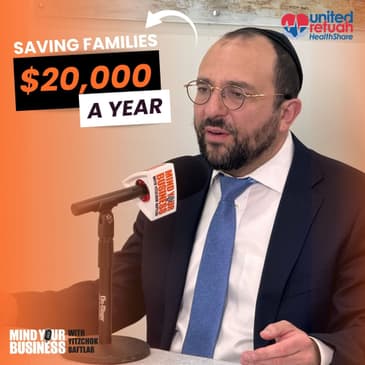
In this episode of Mind Your Business with Yitzchok Saftlas, Rabbi Moishe Katz, CEO of United Refuah HealthShare, sits for an hour of pointed questions about the first and only Jewish healthcare sharing ministry in America. Yitzchok says it up front: at a fraction of the cost of traditional coverage, it sounds too good to be true. So he asks accordingly.
Rabbi Katz walks through the numbers line by line for a single member, a couple, and a family. He explains what happens in a month when medical needs exceed contributions, and what the organization does if that ever becomes a trend. He is direct about pre-existing condition limitations, including the ones that never phase out, and about the kind of applicant United Refuah cannot accept. He names, on camera, the type of person this model is wrong for.
One of the most striking moments has nothing to do with sharing guidelines. A member facing a six-figure medical bill was shown how to engage the provider directly. Two phone calls. Twenty thousand dollars off each one. Another member walked back into her surgeon's office and asked for a discount on a $30,000 procedure. She got $8,000 in about five seconds.
For business owners weighing what health coverage is costing their team, for families carrying the expense themselves, and for anyone who has read the words "not insurance" and closed the browser tab, this hour is worth the time.
In this episode, you'll learn:
- Why the government permits healthcare sharing only within a religious framework, and what that means in practice
- How a ShareFund works, and why every dollar is traced from one member to another
- What a single, a couple, and a family are actually responsible for before 100% sharing begins
- Why United Refuah tells members to negotiate their own hospital bills, and how much that saves
- What is shared and what isn't, including prescriptions, mental health, therapies, dental, and maternity
- How pre-existing conditions phase in over four years, and why full disclosure on the application matters more than people think
- Why an employer might hand employees the difference in cash instead of a health plan
Featuring:
Rabbi Moishe Katz, CEO, United Refuah HealthShare
Apply: https://unitedrefuahhs.org/apply-now/
Website: https://unitedrefuahhs.org
Phone: (440) 772-0700, extension 1 for general information, extension 2 for current members
Mind Your Business listeners: apply with code MYB2026 and get $100 off the $125 application fee. The code must be entered at the time of application. New memberships only, no add-ons. Valid through December 31, 2026.
United Refuah HealthShare is not an insurance company and does not offer insurance. It is a nonprofit healthcare sharing ministry in which members share one another's eligible medical expenses. Contribution amounts, sharing guidelines, and program details discussed in this episode reflect the program as of summer 2026 and are subject to change. Nothing in this episode is insurance, tax, or medical advice.
----------
Follow Mind Your Business:
Website: www.mybradio.com
LinkedIn: @yitzchoksaftlas
Instagram: @mybradio | @businessclassclips
TikTok: @businessclassclips
YouTube Shorts: @MindYourBusinessVideo
About the Channel
Mind Your Business with Yitzchok Saftlas features thoughtful discussions with executives, entrepreneurs, nonprofit leaders, and changemakers. Hosted by Yitzchok Saftlas, CEO of Bottom Line Marketing Group, the show dives into leadership, marketing, fundraising, and organizational growth through real stories and practical insights.
[00:00:00] She got her renewal quote, $48,000 for premiums for the year and $13,000 maximum out of pocket for her family which she anticipated meeting. So that's $61,000. Me and my family, we know that we save on average probably around $20,000 a year and yet, Baruch Hashem, whenever there was an issue, this, the Kindlech, it's covered.
[00:00:20] We have one member right now who needs a refuel Shalema, who's diagnosed with a very serious brain tumor. And one of the major medical referral agencies told him that for his particular illness, the best treatment that's available for him is an experimental treatment that can be administered only in England. It's over $100,000, we're getting close enough to about $150,000, likely not covered by any insurance company, both because it's experimental, out of the country, and we're footing the bill.
[00:00:47] Now the ads you write, United Refuah is not an insurance company. So, but meanwhile, people want to make sure that they're covered. It seems too good to be true. United Refuah HealthShare. So many in our community have heard about it and they're thinking, is this really a great option for me? It sounds too good to be true.
[00:01:06] My healthcare needs are covered and it's a fraction of the cost. This show is going to address all the tough questions that you have about this fascinating invention, United Refuah HealthShare.
[00:01:45] Having the schuss to catch up with Rev. Moishi Katz, CEO of United Refuah. Rev. Moishi, thank you for sitting down on this edition of Mind Your Business. It's a pleasure, B'Yitzchak. It's an honor to sit with you, to spend some time with you. Shemcha'elech v'fanecha. Yeshe k'echa. Yeshe k'echa. It's a pleasure, though. I want to share that we reached out to United Refuah. Why? Me and my family was likely to be part of United Refuah probably for around close to the beginning of United Refuah.
[00:02:12] You started around eight years ago. We're maybe six, seven years in. And I hope it's okay that, again, we'll still remain friends after this interview. But we reached out and said, you know what? There may be, I don't know if the word is confusion, misunderstanding.
[00:02:31] How in the world is it possible that there is an organization, United Refuah HealthShare, which runs in its ads, and we're going to get to it later in the show, a note that it's not an assurance. However, you solve a very serious issue regarding healthcare-related costs, and you solve it at a fraction of the price. It seems too good to be true.
[00:02:58] So I hope it's okay. I'm going to be asking a lot of, if it's okay, pointed questions. But first, let's go back to the very beginning. Soif Maisa, Bemachshav HaTchila, how did it all start? Okay. So you start off with a very good psicha, a very good introduction. Thank you. That's what they call the elephant, right? The elephant in the room. The elephant in the room. Let's go straight in. Let's go straight in. How did it start?
[00:03:22] It started with a group of community leaders, a group of community activists who understood that there was tremendous pain in our local community in Cleveland and in the Jewish community nationwide in managing healthcare expenses in an affordable way. The healthcare need is not something that can be ignored. It's no less important, if not even more important than certain other discretionary expenditures. We're not talking about summer camp. We're talking about the basics. This is vital.
[00:03:51] Housing, food, tuition, health. Health. Health. Those are the four big categories that the average Jewish family spends the bulk of their income on. Right. And the healthcare expenditures were just growing and growing every year. If you look back from 10 years ago to where things stand today, the increase is incredible. The fixed expenses, the out-of-pocket expenses, the employers that have cut benefits to employees, the ones that used to give excellent plans, that no longer provide that level of subsidy or no longer provide any plan.
[00:04:20] And they saw the pain was great. And at the same time, they also saw that there was a solution that existed outside the Jewish community. That solution was a non-profit solution. Okay. Healthcare sharing. Sharing in healthcare expenses in a non-profit model, which the government only allows to take place under the framework of religious beliefs.
[00:04:42] That means the government understands that there are certain religions that within the framework of the religion, we agree to share in each other's burdens in different ways. So the government allows a healthcare sharing ministry to be formed, HCSM, which means people with shared religious beliefs come together to share in each other's medical expenses without any investors, without any overhead other than running the program. The costs of salaries for your employees.
[00:05:09] There can't be any for-profit locked in that's milking the revenue, milking the profits, knocking things up in a way that's going to generate profits, the way an insurance company is formed. Again, they're for-profit. We can talk about that separately. And they saw that that model only works right now outside the Jewish religion. There was no option within the Jewish religion for healthcare sharing to take place.
[00:05:32] So again, so to understand the government would allow certain, let's say, religions to have its own health share group, which then would allow other members to share in the expenses. And then therefore, this is outside traditional insurance. Correct. We don't use the word alternative to health insurance. We don't use, definitely not the word health insurance. It's an alternative way to manage healthcare expenses.
[00:06:00] For example, when there was a federal healthcare mandate that you had to have insurance, otherwise it was a penalty. Anyone who was a member of a healthcare sharing ministry that qualified using all the IRS qualifications, the five rules, one of them is you have to be a nonprofit and you have to perform an annual audit. You have to keep people on the program. Even if they develop a medical condition, you cannot terminate them and two other conditions.
[00:06:25] The government's fine with anyone with the same religious beliefs come together, not pay the penalty. You're exempt as long as you're part of a group that takes responsibility for each other's medical expenses under this framework. Okay. So I was going to ask a straight question. So again, a group of, hey, look, he came together from Cleveland. I think, right, Baruch Haim. The visionary, the founder, the chairman of the board.
[00:06:49] Who saw this need and yet there was no health share for the Jewish community. Correct. So he started putting two and two together. He saw that in order for a Jewish person to take advantage of the benefits of healthcare sharing, which primarily is the healthcare cost savings, they would have to go and figure out a way to join another religious group's healthcare ministry, which, again, depends how you define the religious beliefs. Are they vague? Are they specific?
[00:07:19] But either way, they were not in full alignment with Jewish beliefs. And it got more and more complicated the more people looked into it, that this is really not our religion. And that's not the intention of healthcare sharing. The intention of healthcare sharing is really to come together under the religious beliefs that you truly believe in, you truly share in. And because of that, after exploring the different options that were available, first to see if we can open up as an umbrella of an existing healthcare sharing ministry with Jewish people using Jewish beliefs,
[00:07:48] which over a period of time prior to our inception, we saw that that was not a realistic way to operate for many reasons. We had the Siata Deshmaya to find the methods that were necessary to implement a healthcare sharing ministry exclusively for the Jewish community nationwide. Wow. Now, if it's okay, I'm just going to ask a marketing question. And that is, so you're coming into the market. I imagine this may even be a question until today, but especially in the beginning.
[00:08:17] So you're coming into the firm market with an incredible solution for the, for kind of our large families to have a great, and we're going to get to, you know, the price difference is like unbelievable as a fraction of traditional insurance. And yet you're communicating a concept. And even on the ads, to strengthen my question on the ads, you write, United Refuah is not an insurance company.
[00:08:47] So, but meanwhile, people want to make sure that they're, that they're covered. And we're going to get to those details later. But here you have this, this, like, what's going on? People are, are coming in with, with, with, with like questions. Like, wait a second. Like, what exactly is this? And at the end of the day, if has for shalom lay aleinu, there's a, there's an emergency, a health emergency. Will I be covered? Right. Okay. So. Hakdama. Yeah.
[00:09:15] We're very careful to stay away from insurance terminology. We can make analogies if we speak out very clearly that our intention is not to infer any type of insurance concept directly. But the word coverage is something we stay away from. We use the word sharing because covered is a guarantee type of word. And we stay away from guarantees. So we're deductible, co-pay, co-insurance, all these words we stay away from. We have similar terms, which clearly indicate that it's sharing concepts, not coverage concepts. Okay.
[00:09:44] Now your question about the marketing side, going back to April, 2018, when we brought the first set of ads under the guidance of bottom line, the marketing to the market, we were not introducing crustless bread, which the need is clear. Nobody likes the waste of the crust. Nobody likes the effort involved in having to cut off the crust every morning. Simple problem, easy solution. You understand what it does. You understand. Yeah. No problem.
[00:10:14] The jelly that doesn't stick to your fingers. We understand. Over here, we're talking about life and death. We're talking about people's concern for their health, people's concern for their life, not just for a well visit, but like you said, a critical event, an accident, an illness, serious things, which is what people pay for insurance coverage for. We needed to introduce that there is another concept. There is another way where a person can feel comfortable that their medical needs will be met.
[00:10:40] And the primary way of conveying that information is by showing that you're a community that cares. Right. And at the end of the day, what we care about as a Jewish community coming together is that the outcomes of every health care expense and every health care decision should bring about the best health outcome.
[00:10:55] And when you convey that message accurately and you convey it in a way with building trust with your members from one story to the next story to the next story, that is the way that you can convey this concept of health cost sharing to be a viable method of managing health care expenses and not an irresponsible way of managing health care expenses. Fascinating. Now, let's talk about when Baruch Haim and others came together. Their vision was L'Shem Shemayim.
[00:11:27] And legally, this is set up as a nonprofit. Yes. So there my question is, to the extent that you could share, what are some of the elements that go into, whether it's the sharing between one another, whether it's the structure of the board? What are some of the, just fascinating by this, if I could ask, by some of the dynamics of the fact that you are sharing in people's expenses, yet it's a nonprofit. Excellent.
[00:11:55] So the structure of our board is very diverse. Again, it's all going to be people who care about the community, people who care about the best outcomes for the health of our community. We have a lawyer, a doctor, an accountant, and Baruch Haim as an entrepreneur and a successful businessman on his own, together with others who understand the needs of our community and who understand what it means to run a true nonprofit without any motivation other than bringing about the best outcomes for constituents.
[00:12:25] So every decision that we make has nothing to do with what's going to generate more profit. It's about what's going to be the best solution for the problem that we are coming to serve our community. That's it. A to Z is what is the best that we can do for our community. Now, a little bit later in the show, we're going to get to dollars and cents. Yes. But I'm again, but I know I've drank the Kool-Aid, me and my family. We know that we save on average probably around $20,000 a year.
[00:12:54] And yet, Baruch Hashem, whenever there was an issue, this, the Kindlech, it's covered. Lamaise, you started with roughly 100 members. That's it. Okay. Today, Canine Hara, you're at 20,000 members. You're growing at a real clip, as they say. What's driving that kind of growth? What's driving is the carrot and the stick on one end. There's two parts of it.
[00:13:21] There's the part that the suffering of the expenses that people cannot tolerate. They can't afford it. How can an average family pay $30,000 a year for healthcare? Unless they're getting a great subsidy, either from their employer or from the marketplace. It's, for the most part, unaffordable for the middle class family to pay regular healthcare costs. Now, what drives, that's one side that drives growth, is that people just, they're desperate for a more affordable solution.
[00:13:50] They're finally willing to open their eyes and see, yes, there is something that works for their friends, something that works for their families. That's number one. And number two is definitely, like we said before, it's the building of trust. It's establishing with your providers that you're a payer who pays on time, who pays fair. And when the patients speak to their doctors and they have discussions about insurance and they hear other people in the doctor's office, oh, I'm on United Refoa, that builds a trust. And when their family and friends have stories, that builds a trust.
[00:14:18] And that's what's driving the incredible growth. I just checked the reports. It's, as of August, 2026, the growth of memberships this year was 56% over last year's total memberships. We're holding in August. Now, we don't take any credit for that. It's not because we're gurus and not because we did an incredible job. We do our established in marketing. We do our established in taking care of our members.
[00:14:44] And definitely the pain of people not being able to afford regular medical expenses using traditional methods. And the building of trust is something that contributes to the overall growth of the organization. My guest in this edition of Mind Your Business is Rav Moishi Katz, CEO of United Refoa HealthShare. And thank you. You're gracious enough to allow me to ask a series of pointed questions, which I imagine you're asked all the time or your team is asked all the time.
[00:15:13] And that's why I appreciate the opportunity to sit down and ask these questions. Yeah. Another question is retention. You know, in any type of business, there's an issue of retention. United Refoa is not a business. It's a nonprofit. I would say no one leaves, right?
[00:15:35] What's the alternative to spend $3,000, $4,000 a month when depending on the individual and his situation, he could be spending a few hundred at maximum $500, $400, $400, $500 a month, as opposed to almost, right, almost $3,000, $4,000 a month. And we're going to get into some of those details regarding an individual, a family plan, a couple. But no one leaves. Or is there ever a situation where there, you know...
[00:16:04] There definitely is a very high retention rate. Okay. But there's also going to be people that leave. If we look at this past year to date, I would say, I told you, 56% growth of memberships. Right. About one-tenth of that number left. Meaning it's a net growth. But again, you're going to have a number that leave because of becoming eligible for Medicaid. It was changes in their income. They became eligible for employer insurance. Right. I met someone yesterday. He said he's getting a promotion.
[00:16:35] And because he's getting a promotion, he's now eligible for his company's insurance plan. So... Which previously he did not have that eligibility. Okay. So we can't beat that. And then you're going to have the people who misunderstood the program. They didn't realize there's limitations on pre-existing conditions. They didn't realize there's certain therapies that their children might need. Advanced therapies. Which certain other programs will pay for. Which may not be within the limits of our program. And it's not going to be a significant number. And they're all understandable.
[00:17:02] The number of people who leave because of customer service related concerns is really, really negligible. And I'll just close the question. Sure. Take a look at our Google reviews. And there are hundreds of Google reviews. And there are three negative reviews. And those three negative reviews are all from people who we were not able to accept for membership. They are not from people who were active members who actually received services from us. Wow. So... We couldn't help them. We couldn't help them. They weren't fit for membership. So now this really leads me to my next question.
[00:17:32] 20,000 members. You're dealing with a lot of... There's Foshes. A lot of Helik Yid and Kal Yisrael. Describe some of the major medical needs that United Refua is helping people with on a day-to-day basis. So the needs that we like to share in are obviously the well visits that we promote. People should take advantage of our wellness allowances that there are no out-of-pocket costs. We share from the first dollar.
[00:18:03] That's simple, easy. Vaccinations, urgent care visits for minor injuries, an ear infection, a fever. Simple things. You get to more complicated things, which again we like to share in those as well. The maternities, Baruch Hashem, B'li'ayin hara. Those are things that we love to share in. Kal Yisrael is growing. The membership is growing with them. Those are wonderful things to share in. And then Rachmaneletzlan, people go through medical events, whether it's appendicitis,
[00:18:32] whether it's a hernia surgery, whether it's an internal infection, whether it's Rachmaneletzlan, something even more serious. Cancer, something like that, which we're dealing with active members now, different stages of treatment. We're there for our members from beginning to end. We have one member right now who needs her for Shalema, who was diagnosed with a very serious brain tumor. And one of the major medical referral agencies told him that for his particular illness, the best treatment that's available for him is an experimental treatment
[00:19:01] that can be administered only in England. It's over $100,000. We're getting close enough to about $150,000. Likely not covered by any insurance company, both because it's experimental, out of the country. And we're footing the bill. We wired the money to England. We just sent another payment last week for another dose of this treatment for him. But again, it's the full gamut of care, whether it's hospitalization, surgery,
[00:19:28] urgent cares, sick visits, well visits, imaging, and everything along the way. So this is starting to paint a picture of a health share, meaning it's Klal Yisrael looking out for one another and sharing in their medical expenses. Right. The sharing process is real. Internally, every medical expense has to be assigned to a membership account to be paid.
[00:19:55] So if someone has enough money in their own share fund, is what we call it, to pay for their own medical expense, it will first get paid from their own share fund. If there's not enough money in their own share fund, then money gets transferred automatically from other members' share funds into their account to pay for that medical expense. So for example, I saw a transaction, which everyone can see, of several thousand dollars that were deducted from my family's share fund to pay for someone else's medical expense. Now, on the front end, you can't see where the money went.
[00:20:23] But I took a look to see where did my money go on the back end. Because every dollar, again, is directly allocated to specific medical need. And I saw there was a woman who had a baby, and Baruch Hashem, a few thousand dollars went to pay for her labor and delivery charges for her baby. So that's an incredible feeling that not only myself, but many members have that feeling as well, that at the end of the year, even if they don't have any medical expenses, the money that they put in for their monthly contributions, even if it's not needed for their own medical expenses,
[00:20:50] go to pay for the medical expenses of other community members. And they have that tremendous feeling of satisfaction. It's not wasted money. It's not a premium that went unused. Now, if I may, there's a Ruchnia side to this, of Neusabayal and Chavayray. Incredible. Incredible Neusabayal and Chavayray, both on the financial side and also on the tefila side. When someone's going through something, we give them the option, case managers proactively offer it, to give their name, either if it's something very serious,
[00:21:18] we can send out a direct email to all members immediately. Someone's going into emergency surgery. I remember one, a child last year was very, very ill. It was Erev Shabbos, an accident. Accident happened. And we sent out like two hours before Shabbos, we begged all our members to please that this child should have a refuah shlema. We say Shabbos, the parents told me that everything turned around. The child was released from the hospital. No deficits, nothing. It was a nace.
[00:21:47] It was Mamish, a nace. But the tefila. It was a fatal, it was a very, very serious situation. The doctors were very, very concerned and warned the parents to expect the worst. And we had that tefila, Kayach HaTefila of the Rabbim. We all come together. It's not just about the money. Definitely Neusabayal and Chavayray, both on the financial side and on the Ruchnia side. And we feel a certain level of siyata de Shmai that comes from that alone. That it's Klai Yisrael coming together.
[00:22:14] It's not just another service that we pay for to get a benefit from. I'm now going to ask a question. I'm going to use the word business, but not as it relates to United Refor. You have companies, a lot of Baruch Hashem, very, you know, very successful from companies out there. And once upon a time, they would offer insurance from the regular insurance companies. And now they would like to explore.
[00:22:42] And there are many companies that actually paused because of how complicated and how expensive it got. And they're saying to themselves, hey, maybe this is an option to offer United Refor HealthShare. Can I ask that question? You can ask that question without giving direct insurance advice. So people should always ask their insurance brokers direct insurance advice. Now, if someone's a large employer, which usually means 50 or more employees, then they're required by law to provide an insurance plan. A person can opt out of the plan and people can still purchase other options.
[00:23:10] But the employer has an obligation to offer a plan. So let's talk about the smaller employers who do not have an obligation. And all they're trying to do is offer a competitive compensation package for their employees, which was costing them a fortune, which was costing them, I think the average per employee, they said, is about $19,000 for a single employee, for a health insurance plan, which is very, very high. Now, compare that with United Refor single membership, which this year stands at $199 a month. A couple of $349 family, $499 for family of six. We can get into that a little bit later. It's tremendous savings.
[00:23:40] And they can offer something meaningful to the employee. So there are employers who do offer that. Now, it is going to be a taxable benefit as of now. It may change. There is a proposal to change it. So if you're giving your employee a family membership of $499, it gets added on as additional compensation at the end of the year for their taxes. So let's say they have a 20% tax bracket. They'll have to pay $100. Either you can offset it for them, you don't offset it for them. But one employer in New York told me that this is what he told his employees. I offer an insurance plan or you can go to United Refor.
[00:24:09] He himself with his family is on United Refor. He said, if you go on United Refor and I don't have to pay for your insurance plan, which is part of your benefits. He's a small employer, but he offers it. I will give you on your paycheck every month the $1,800 difference between what it would cost United Refor membership and the insurance plan. I'm not going to keep it for myself. It's your decision. You have a right to get the insurance plan under your compensation package, but I'm happy to give you the money if you opt into United Refor. There's an employer who told me himself that he does. Very smart. So he's incentivizing them to...
[00:24:38] Now, United Refor is not health insurance and you're right there in all your ads. So perhaps you could just come back at this again to understand what exactly is a healthcare sharing ministry and how is that different from insurance? Like a straight up question. Straight up question. Very important question. Because one of the big fears that turns people away is that disclaimer that we have to write. Right. Not insurance. There's not offering insurance. So what does that mean? So what is this if not insurance?
[00:25:07] So insurance, again, is a for-profit corporation in general that promises to pay the medical expenses of its policyholders based on the premium that was paid by the policyholder. There's no exclusions on pre-existing conditions. They're required by law to pay for all pre-existing conditions. They're required by law to have very, very unlimited sharing for all medical expenses that are covered. Things that we don't necessarily believe in under our religious beliefs. And that forms a very expensive model of healthcare spending. Right.
[00:25:36] Because the pre-existing adds up a lot. The prescription medications can be a very, very big expense, especially for pre-existing conditions. And again, if they're going to pay for medical expenses against our religious beliefs, those can also add an effect. A healthcare sharing ministry, again, it's a non-profit. We come together. We share in very specific medical expenses, which are the standards needed for regular medical care, for emergency medical care, for planned, not necessarily emergency, but medically necessary care.
[00:26:04] Someone needs a hip replacement because they're getting older and the hips are working properly. That's medically necessary, even though it's not emergency. So the standard non-pre-existing, which we can talk about pre-existing separately, we're here to share in those expenses with specific sharing guidelines and limitations that work for our community with an understanding that we're in this together. We're here to spend together, to take care of each other's health. Now, there's a term called share fund. I'm not familiar with that.
[00:26:30] I'm familiar in general, but perhaps you can explain. I'm sure it's something that we even touched on, but just that word share fund. What does that mean? So when I mentioned share fund before, the way that it works is the government, or at least certain state governments, require that the sharing take place member-to-member sharing. It's not that there's this big pool that all the money goes in and all the money just gets paid out from this big pool. A medical expense gets paid from one member to another member.
[00:26:56] So if there's a big expense, let's say someone has a $100,000 surgery and we need to take from 30 different members or 40 or 50 different members, it's all clearly money moving from one member's share fund, which is an account, a restricted asset that can only be used for medical expenses to the member in need. It's not something that's the organization's money, the company's money. The money belongs to the membership. It's again, a restricted asset can only be used for the medical expenses of the members, different than money we set aside for infrastructure and overhead costs.
[00:27:25] Got you. And as a nonprofit, that's all trackable and it's all documented. Every penny and the members have access to their share fund. They could see what they put in. They could see the deduction every month for administrative costs. And they could see money that was paid for their own medical expenses and money that they shared for other people's medical expenses and money that was shared from others for their medical expenses. They'll also see that movement of money into their share fund on our membership member portal.
[00:27:50] Now, before I get to my next question, I just want to ask, I've seen in some of the ads a rough number, which just sounded too astounding, of how much you saved the community to date in eight short years. If I recall correctly, it was a quarter of a billion dollars. Almost. 220, 230 million dollars. That's close enough. Close enough. Very close. I'm afraid to say 250 million yet. Almost. Another probably month or so, two months.
[00:28:20] That's real money. That's an incredible amount of money. It's who knows how many thousands of weddings worth of money. Tuitions of money. Halimut. You know, if I meet someone and tell me, I need to thank you because you really saved my family year over year, $15,000 of real money. As a small family, I know my cost on health care went down $15,000 every year. And we have people that are saving significantly more. Someone told me, his accountant told him, listen,
[00:28:47] the last five years, you could have saved $30,000 a year. That's $150,000. You could have bought yourself a vacation home, he told him. He said that's what pushed him to make the switch. His accountant told him that. So it's real money. I know myself, I probably save about $30,000 a year over the options that are available here in Ohio. They'll provide similar, again, I don't want to use the word coverage, but similar level of medical costs. Exactly. Management. So the money really adds up.
[00:29:17] Go look at what happens in five years. What happens in 10 years? Right, right. It doesn't take too long to get to the number of $250,000,000 and the number is going. Now, Baruch Hashem, it's possibly one of the greatest savings programs that Klai Yisrael has seen. Again, without taking any credit, it's the siyata de Shemaya that Hashem gave Klai Yisrael this matono of having their own way to manage their medical expenses and reduce costs in such a dramatic way.
[00:29:42] Now, Ramoshi, you had shared that it's okay I could ask like a pointed question. You know, medical needs aren't always, you know, people, Hakodesh Prochuh runs the world and always must follow for good health. And when Khalilah Leleinu, a situation comes up, it's many times unexpected. What happens perhaps regarding a health share? There's a certain amount that comes in and there's a certain amount that goes out.
[00:30:07] Can I ask the question of like what happens regarding sharing if let's say there's a month where the expenses, Khalilah, are more or far more than the income, I don't want to say income, but the money that's coming in through the membership contributions. Right, okay. A very important question, financial question. Yeah. So if we look back since we started again in June 2018, about eight and a half years ago, Baruch Hashem, I think there was only one month that the medical expenses of that month
[00:30:36] exceeded the contributions of that month and was only by about a half of a percent. I think it was 100.5%. Now, if we look back since our inception, Baruch Hashem, the money that's put away every month, when I say put away, I mean the residual in the share fund is very, very significant. Our average claims payout ratio since we started of all the money that went into the share fund is about 54, 55% is the claims payout ratio.
[00:31:04] If we look at the past 12 months, it's more around 70%. So I mean, the money is definitely being spent for medical expenses, but there is a buffer that's created within the monthly contributions, not just month to month, but in long term as well, to allow for those unexpected higher cost events as well. Now, if Hasrashalma health share would ever exceed their available funds total, that's when a health share can make a decision either to request a one-time additional contribution from members.
[00:31:31] It's not a fixed policy that you promise your policyholders, this is what you will pay the entire year. But you have that option to request either one time, or if you see that, again, the trend is going up over time, that's when you would make a decision together with the board of directors to raise whatever percentage is reasonable to make sure that the margin, the buffer is comfortable for members to feel comfortable that their medical expenses will be paid for. So based on what you're sharing, the fact that Baruch Hashem only one time, one month,
[00:32:01] it went up by a drop, but in general you're 50% to 70%, as far as the income, the ratio. So that also probably explains why, and I'm just saying this as being so touched, you've been able to freeze the rates for such a long period of time. Baruch Hashem. Since we started in June 2018, we lowered rates once. For families, it went down from $519 to $499.
[00:32:26] The singles went down from $219 to $199. We cut the co-sharing in half, which we'll talk about later, which is very significant. The family could save as much as $4,000 a year on their co-sharing, and we've not raised it since. Now, it is very possible, if not likely, that for 2027 there will be a small increase just to accommodate the increases in medical expenses this past year and anticipated increases, which they're projecting to be 9% of medical expenses across the board for this upcoming year.
[00:32:55] And, Ravanshi, I don't need to share with you that even over the last six, seven years, healthcare costs have increased dramatically. Right, and that's the explanation between the average of the 50-something to the past 12 months, 70, as the claims payout ratios, because definitely medical expenses are increasing. Okay, now let's go to, you know, Tachos. Who is actually eligible to join United Refua HealthShare? Is membership limited to someone who's from,
[00:33:25] you talked about sharing in each other's beliefs, perhaps you could touch on that. Okay, so we tell people the ideal member is someone who's in overall good health, no known upcoming significant care, which would be a burden. When I say burden, I mean that the cost of their care will exceed their contributions. That's something that we look at. From what we know today, is this person likely to be a contributor or likely to be need from the share fund? And you're also doing it to be sensitive to every other member,
[00:33:52] the presently 20,000 members who are on the system. Exactly. And overall good health. And they're under age 65. Religious beliefs, they have to agree to our shared religious beliefs, which include the Yod Gemel and Imamans. They have to lead at least a minimal life of Torah observance, which we can get into more specifics on a case-by-case basis. If someone has a question, they can reach out. Just to satisfy the legal obligations of someone adhering to our religious beliefs to become a member of the organization.
[00:34:21] As long as they don't have any significant medical conditions, which would preclude them from membership, they're welcome to apply for United Refuel HealthShare. Okay. Now, let's walk through the numbers straight up. You shared this and okay. A single member is contributing $1.99 a month. Right. Okay. And then remember, there's also the terms of pre-share, co-share. At what point does United Refuel
[00:34:50] begin sharing 100% of their eligible expenses? Okay. So like you said, a single right now contributes $1.99 a month. It's an extra $10 if they pay by credit card. The first $500 of their medical expenses, which we refer to as the pre-share, meaning before we share, is their own responsibility with the exception of the annual well visit and certain other preventative care. After the $500 of their own medical expenses that have been paid as their pre-share,
[00:35:18] they will then be responsible for 20% co-sharing on the next $5,000 of eligible medical expenses, which means they would pay $1,000. We would share $4,000. After that point where they already paid the $500 pre-share, they paid the $1,000 co-sharing. That's when we will begin sharing up to $1 million per incident at 100%. And again, that's after the first 60 days of membership, which is somewhat of a waiting period, which has limited sharing of $25,000
[00:35:47] for all conditions and all events that present during the first 60 days of membership. Now, just to finish the answer to the question, when we say $1 million per incident, it's eligible medical expenses. So whatever eligible means, fair, usual, customary, we could talk about that soon. It's not an unlimited paycheck that people take to their doctorate, but we talk about that separately. But eligible medical expenses at that point, $1 million once they meet their pre-share and co-share. Now, we don't want anyone to get distracted
[00:36:17] and then go visit the website. But if I just may ask, what is the website where people can go and visit to find out more information? UnitedRefua.org, O-R-G. Everything's there. Explainer videos. Okay. And if people have specific questions, is there a number they can call? 440-772-0700. Very friendly. Advisors, you will not be asked the question, can we sign you up? We are not insurance brokers. We're not looking to make the sale. We're looking to make sure
[00:36:46] that it's the right fit for you and your family before you join. So don't be scared to call. Excellent. Now let's talk about the membership levels for a couple and a family. Couple, $349 a month, $499 a month for a family of six. Good. Pre-share, co-share, perhaps you could again explain when it kicks in as far as their coverage. Perfect. So a couple is $349 like you said. And coverage, I'm using the word limit. Sharing, right. Share. Couples $349 a month,
[00:37:16] extra $10 if they pay by credit card. It's going to be a $1,000 annual pre-share shared by the couple. And then after that, they're going to be responsible for 20% on the next $10,000 of expenses. After they meet that, again, it's the same $1 million per incident that we will share at 100% after the first 60 days of membership. For a family of any size that's paying $499 for family of six and $50 for each additional family member per month,
[00:37:45] there's a $1,500 annual pre-share that's shared by all the family members. And then after that, 20% of the next $20,000 is going to be the family's co-share responsibility for the year before we start sharing up to $1 million per incident. Now, again, because those numbers are shared by the family, it's very easy to meet them with different family members' medical expenses coming together. So if there was a baby born and they wiped out their pre-share and co-share, let's say for the year, under a couple,
[00:38:14] then if there was another event that's like a kid had appendicitis or something, there won't be any responsibility from the member because they would have already met their pre-share and co-share for the year for the membership. Now, just to speak out, there is another expense for maternity, which we can elaborate more later. I just want to make sure there's an asterisk there that there's additional expense when it comes to maternity. So now, let's, before we get to maternity, just, if there's a catastrophic event,
[00:38:43] how does that work between pre-share, co-share, what's ultimately shared in such a, you've touched on it, but now I'm just coming with this question direct. Sure. Rachman al-Hitzlan. Rachman al-Hitzlan. Hashem should watch. Amen. Amen. All of his children b'chom m'okem shehim. Amen. If someone has a significant medical event of any type, we do assign a case manager. The case manager's job is to hold the member's hand through the process, guiding them,
[00:39:13] making sure their needs are met, making sure their payments are expedited as necessary, making sure that they have the emotional support that they need and not have to navigate it on their own. Now, when I say emotional support, they're not their social worker, but they're there to streamline the sharing process, to streamline whatever we are able to do to make it easier for them. Now, let's say Rachman al-Hitzlan, a person has a serious illness, they need a surgery that's going to be $80,000, they need treatment that's going to be another $150,000. So they're going to have
[00:39:43] their pre-share and kosher that's going to be applied right away from the beginning of their medical services. After that's done, everything's going to be eligible for sharing again as long as it is within the usual and customary rates and up to 100%, $1 million per incident. Over the years, I can tell you just because people ask, you know, why don't you increase it to $2 million between negotiations, case agreements with hospitals, self-pay pricing, whatever different models that we've been able to work together
[00:40:13] with providers to keep costs low, our members have always been able to keep their total expense per incident well, well, well below the $1 million incident to the point that even though we're not allowed to make any promise to pay or tell people will never be a problem or anything like that, realistically speaking, no one has ever come anywhere remotely close to that number even with very, very significant illnesses or significant injuries or heart problems. So you asked how the sharing process works.
[00:40:43] If they're going to be paying their provider on their own, we can expedite reimbursements, whether it's a 24-hour ACH payment to them, whether we're paying the provider directly, we'll make sure they're not stuck. When I say stuck, we'll make sure to work with them, with their providers to make sure they get the care that they need within the sharing guidelines in a timely manner. There's no bureaucracy, meaning we're here to make sure things move fast, there's nothing holding up their care. And there's someone to talk to. There's someone to direct contact, the case manager who's the member's case manager
[00:41:12] to make sure that there are no hurdles along the way that aren't necessary. Now let's talk about the Baruch Hashem, the Brach and Klai Yisrael with the amount of kindleach that are born. Let's talk about maternity and also just an interesting question, you know, what happens if the baby's born and now, you know, there were four kindleachs, there was a family of six and now suddenly there's five kindleach, it's a family of seven. Just walk us through that. Yes. As I said, those are the expenses that we look forward to sharing in. You know,
[00:41:42] Halifai, that should be the only thing we have to pay for, maternity and well visits. Now, the way that it works with maternity is the only membership that has the same sharing for all medical expenses including maternity is the family membership where it's just going to be the standard pre-share and standard co-sharing. The singles and couples do have an additional responsibility which we refer to as a pregnancy pre-share of the total cost of maternity for a single because they're putting in so little every month. Right. They have to take on their own additional responsibility
[00:42:12] of $2,500 of the total maternity costs on their own. Okay, understood. Right. Because let's say the husband gets coverage through his company but the mother does not or whatever. Right. Or he's on his COLO plan and she's not eligible or things like that. Right. Which is common. We do see quite a few of those. Or we have people who they have Medicaid or they have some other insurance plan but they only are covered in network or they're only covered in state and they want to go to a doctor out of state. A specific doctor. Right.
[00:42:42] Because we share nationwide any doctor or any hospital anywhere in the world. So we have many people actually that will purchase a United for a membership or sign up for United for just for sharing in their maternity expenses out of state. So we will share minus the $2,500 maternity pregnancy pre-share minus the pre-share minus the co-sharing. The pre-sharing and co-sharing it's important to note that those do reset every calendar year. The pregnancy pre-share is per pregnancy. Okay. Now for a couple in addition to the regular
[00:43:11] pre-sharing and co-sharing there's also a $900 pregnancy pre-share it's less. Okay. The families we eliminated it there's no additional pregnancy just a standard pre-sharing and co-sharing nothing specific for the pregnancy. So let's say if an average pregnancy can cost $15,000 it's hard to nail an exact number depends on a lot of factors the state that's all going to be changing in 2027 because the billing for maternity is switching from global meaning one fee for all services combined to per service. So it's going to become a very big variable number that's really going to be
[00:43:41] very pregnancy specific. The members will on average max out their pre-share and co-share for a pregnancy except for the family membership which we don't usually see them maxing out their pre-share and co-share because they don't usually exceed $20,000 of total medical expenses for the total pregnancy bills. You asked how that changes the size. So again if they're switching from a single to couple couple to family it's going to change from the month that the baby's born from the first of the month they must add the baby to the membership in order for us to pay
[00:44:11] for the baby's medical expenses. Okay right that makes sense. And if it's going from a 6 to 7 another human being if they're going from a 6 to 7 then it's going to be an extra $50 a month like any other additional family member. Now something that you touched on before which is a tremendous myla tremendous advantage of a health share and that is you know there's no I don't want to say there's but maybe there's no such thing as like in network you have to be in network
[00:44:41] you had a case of someone that needed a special type of treatment and it was in England and it was not something that necessarily the FDA had down yet etc and you covered it because a health share whereas traditional insurance company may not have touched it very possibly we would not have touched it most likely so perhaps you could even touch upon that where not only is it an option where you're
[00:45:10] saving a fortune but there's certain big mylas that you have as far as going to the doctor of your choice but within maybe some parameters perhaps we could touch on that so that's one of the most important concepts in health sharing specifically with United Floor but it applies to other health sharing groups as well just because we give a member access to any doctor any hospital anywhere in the world we don't tell them where they have to go they're welcome to go to preferred provider where there's no billing complexity at all they show their card they pay a small check-in fee they will never see another paper
[00:45:40] again regarding this expense or they can go to doctor they'll bill United for directly we'll pay the doctor they'll pay their pre-share co-share or they can go to any doctor anywhere in the world that will accept them as a self-pay patient they can pay and submit to us for reimbursement they have all those options on the table that does not mean that we will pay any dollar amount for any service that they want to use it has to be what's considered usual and customary usual and customary we define as up to 50% above whatever medicare would pay for
[00:46:09] the same service in the same area which is a very generous rate now if someone wants to go to doctor the bills above usual and customary they're welcome to go there but it's possible they will be responsible for the difference they won't be out of network that we won't pay for it but they'll have that freedom to go wherever they want for care so even they had accidents abroad medical care they needed to go out of state medical care that they wanted to go to the top specialist which is a cash only doctor does not accept any insurance they could still use their United 4
[00:46:39] membership I actually interviewed someone for a position recently and I asked her I said what made you look into United 4 how did you hear about us what made you interested in joining the United 4 team I'll go into the details on the show and they were able to use the top specialist and their outcome was amazing and when she heard that that made a tremendous impact
[00:47:09] on her that it's real it gives members flexibility if they live in New Jersey and they want to go to some specialist in New York they may have to pay something out of pocket but it's not going to be out of network it's not going to be like if they had a local plan in state that only pays for in state doctors that's it they're totally out of pocket so that advantage of being able to choose any doctor any hospital anywhere in the world is a tremendous advantage as long as people have the understanding that does not mean a blank check does not mean unlimited credit
[00:47:38] card it comes with the understanding of usual and customary which also goes that the heart of a health share is a person has the at the same time be sensitive be understanding and we're spending each other's money spending each other's money what would you do if you were paying out of pocket you would not want someone else to be spending your money without thinking if someone has a hospital bill for $85,000
[00:48:08] and we know the hospital bill is overpriced and we know that this hospital gives very good discounts if you ask for them so a member comes and says I don't want to be busy I don't want to ask them for a discount I don't want to deal with this just pay the bill is that responsible is that what they would want done if it was their money that was being spent that's not what they would want done okay so that leads me to a you know a straight up question a member goes to a new doctor now some providers handle it preferred providers
[00:48:37] and by the way I just want to say a big mile here is that within from communities you probably have a much higher naturally a much higher percentage of people that are preferred providers that someone could just come in show their card and it's covered they don't have to go through the process of okay so explain to us how that works either way if a doctor is a preferred provider because again we're not dealing with in-network but just a preferred provider or if the person it's a new doctor walk us through what is a member to
[00:49:07] elaborate a little bit more on that now yeah our preferred provider network which is not a network that a person has to use it's a benefit that members have to be able to go to providers where we have an agreement that they pay a specific low check-in fee between 10 to 30 dollars at the time of service and that's it they don't pay anything else there's no other expenses unless they send out to a lab for special lab work but for the doctor himself that takes care of the medical expense there's no paperwork they're not going to get an explanation of sharing showing that they owe more money from the doctor that's it
[00:49:37] option number two is that the doctor bills United or directly using the information on the card if they already met their pre-share usual and customary we will reprice similar to what an insurance company does even though we don't necessarily have a contract with the doctor most doctors will accept repricing as long as it's reasonable as long as it's using a formula that's accepted in the industry and option number three is if a person goes to a doctor they say we don't know what this is
[00:50:06] we don't know what health sharing is they pay patient and submit to United for reimbursement they upload it on our portal or they can have the doctor do it on their behalf even if the doctor is collecting from them money at the time
[00:50:45] of walk us through what does someone do in that case sure so like when someone calls a doctor's office the recording always says if this is a medical emergency proceed to the closest emergency department so the same rules apply emergency people know and that's part of the member education they do not need to call us until it is safe to do so even though there are certain services that require pre-notification like a planned hospitalization
[00:51:14] or an emergency room within 24 hours we do request that the members be in touch with us so we can make sure that the billing process is streamlined there's no surprises everything's being documented properly a member is not expected to call us but again the guidance is more complementary to them knowing that the emergency proceed
[00:51:44] take care of what they need to take care of and then be in touch when it's safe to do so very special right and understood and people understand it like you're right when a person calls a regular doctor if this is a real emergency call 911 many members will call while they're in the hatzalah on the way to the hospital letting us know but they're already on the way to the hospital they don't have to do that either if it's not comfortable for them yet to do so but within 24 hours of when they reach the emergency department or the hospital we do request that they do reach out
[00:52:14] to us under the pre-notification requirement now i'm going to ask a a delicate but again a pointed question a united refuel member whatever the situation is they're rushed to the hospital it should is there some is there a situation with a hospital because of the methods of united refuel that they might feel that they're getting any less attention or care because of the
[00:52:44] method of getting compensated through a health share okay it's a very hard question to answer in the sense that it really would depend on who's handling the required to receive by federal law whatever care they need to stabilize an emergency now once the emergency is stabilized the hospital is not required to continue their
[00:53:13] care if they need follow-up outpatient surgery the hospital is not required to provide that for them under the same framework of emergency care okay excellent so a person knows that even though they're part of a health share united refuel but still emergency care is the same same federal protections like anyone else okay now let's talk about preventative care and maybe something that's scheduled like hip
[00:53:43] replacement knee replacement perhaps you could talk about how that works within the framework of a health share okay so we'll women's health visit well visit every year in addition to the standard visit that's another $350 every year there's $200 of wellness lab work that we share from the first dollar as well over age 45
[00:54:13] 45 or over get a called scopie allowance of $1,500 again first dollar sharing after the first year of membership women get a pap smear women get mammograms every other year from the first dollar and other preventative services as well that change from time to time depending on what the recommendations are and how we can best service our members to make sure they take care of their health proactively so that's preventative right thank you for splitting the question no problem and then for scheduled care let's say someone does need a surgery so surgery
[00:54:43] any type of surgical consult surgical recommendation will go to a case manager the case manager will walk through with the member what the medical need is what the quote is now if the quote is acceptable it be approved right away subject to whatever the member responsibility is either we can pay the provider directly if appropriate or the member can pay and submit to us for quick reimbursement again once it's under case management it's much faster we can do the ACHs especially anything $5,000 or over and if the price that
[00:55:13] they're being quoted is higher than would be expected higher than usual or customary that's when our case manager can provide guidance whether it's creating a case agreement with the provider whether it's suggesting another location maybe the same doctor works that's a lower cost I can tell you one very short incident that happened we had a member that needed an orthopedic surgery and one of the major New York hospitals they found the surgeon that they needed to use that they wanted to use was about $70,000 for the surgical center and about $20,000 for the
[00:55:42] doctor so we checked the rates and it was significantly more than usual and customary the also operates in a certain outpatient surgical center in New York as well in addition to the hospital and the surgical center said they could do the same surgery they're with the same surgeon for $20,000 $50,000 less so that's nice savings right it's money on the table we didn't stop there though
[00:56:12] our case manager called the hospital back and said we have a quote to do the surgery at I don't want to say wow so the discussion is important the discussion not only because there's a lot of money that can be saved for members real money without compromising on the care that the member is going to receive I can think of
[00:56:54] and they were all upset like what are you talking about like they thought this is just you give the card and pay everything and when they understood the power of engaging with the provider and asking for discounts if I remember correctly they made two phone calls each phone call they made to the provider knocked off $20,000 $20,000 a phone call so she's like whoa like you're right I should not take the first number that they say as the golden number that needs to be paid there's a book never pay the first
[00:57:23] hospital bill like there's always room to talk about you know that whatever they quote you they're willing to have a conversation they're willing to settle fair many providers the number that they're putting on the table is not what they expect you to pay they expect you to have a fair discussion with them but when someone is part of a health share in the case of so then you're holding their hand guiding them advising them in order and sometimes even taking care of the negotiations
[00:57:53] in order to when it's appropriate there was an emergency surgery I remember had a few weeks ago and I spoke to the wife she said she just came out of the surgeon's office he's doing surgery first thing in the morning it's emergency it's going to be $30,000 for the surgeon I said did you ask for any discount she's like you can ask for a discount I was like yeah why can't you ask for a discount you're paying for the surgery you can ask for a discount she said I'm right outside should I go back in I said go back and ask she went back in we take off $8,000
[00:58:23] again just five seconds yeah no problem take off $8,000 it's the same surgery same surgeon he's not doing it they're using good
[00:58:53] rx or needy meds or any other discount program to manage their ongoing or as needed medication costs those members take care of on their own they're not eligible for sharing it's the high dollar drugs when things get expensive an expensive medication now the real tier of high dollar means any group of medications that together will cost $10,000 or more over a three month period that's we share in those medications if someone has a middle ground medication which doesn't meet that criteria
[00:59:22] but it is expensive they can reach out to their case manager and we can see for something either we can help them source for a lower cost using other pharmacies or it's something that we can share partially towards just because we understand the cost burden involved in those medications I will point out though that when we're talking about prescription medications it's all for new onset medical conditions if someone needs medicine even if it's a high dollar drug for pre-existing condition those do not become eligible for sharing even after the
[00:59:52] normal phase and period of pre-existing conditions because it would not be fair to put that burden on existing membership someone who has a known high dollar medication need but what's beautiful is that you still are accepting that member coming in with the knowledge but yet at the same time there's an asterisk to that relationship right that that's basically very very important which goes into the whole conversation of pre-existing conditions okay let's talk about just an area that people deal with whether it's mental
[01:00:22] health or physical therapy OT PT speech therapy how does United Refua handle those situations so those are very common needs we'd be surprised but mental health needs are real mental health care can make a very big difference in a person's ability to perform to get up in the morning to make it
[01:00:53] 125 per visit now someone who has significant mental health needs obviously that's not going to take care of their needs there might be other solutions that are more appropriate for them similar is going to be physical therapy occupational therapy speech therapy that have a shared allowance of additional 12 visits per year 125 per visit if the OT needs or PT needs are from an injury that we shared in the 12 visits we also offer chiropractic care for musculoskeletal issues
[01:01:22] acupuncture those have their own allowances and there's other services as well such as nutritional counseling we offer every member every year to go to nutritionist visits 125 per visit that also goes under the therapy allowance which many members don't use we wish they
[01:01:59] for many years the number is being shared now we're recording the show in the summer of 20 26 just for the record okay let's talk about some other areas dental vision infertility treatment how does a health share how does United Rufuwa health share in
[01:02:31] a member who has five children or six children and they're taking the dent children to every child to the dentist twice a year for cleanings and once a year for care whether the tooth pain or filling or whatever it is the first $100 of each of those visits is going to be eligible for sharing subject to their pre-share co-share vision right now we have one refractive exam per year $50
[01:03:01] we do have a compassionate infertility allowance for couples after the first year membership of the $1,000 per couple per year it's not made to fill the full need for people who have more extensive needs there are other resources we can help our members with if it's necessary now a very important part of this conversation in the preparation was pre-existing conditions we touched on it but just let's say
[01:03:31] I'm going to ask the question straight up a person is dealing with some type of situation they're filling out the form let's say it's not filled out accurately we'll leave it at that you know what are the consequences why is it important for someone to be fully transparent during this very critical onboarding stage okay so I'm going to break it into two questions number one is what is the significance and definition of a pre-existing condition and what is
[01:04:01] the ramifications of someone who does not properly disclose the condition so the significance is anyone who has a sign or symptom or any type of follow-up or care in the three years prior to membership or any significant illness history anything that's considered a chronic or lifetime illness even if it's not symptomatic at the time of application does have limitations limitations in general are no sharing during the first year of the $25,000 per condition per year years two and three and standard sharing years
[01:04:31] four and a small number of medical conditions that can preclude a person from joining diabetes is one of them very significant active illness
[01:05:00] or recent illness can also preclude a person from sharing just because we would not feel responsible taking in someone with a limitation that's so irresponsible for them not to have the protection that they need at that time now because it is so important to properly document and discuss pre-existing conditions because of the limitations involved very clearly say that if someone does not disclose a pre-existing condition at the time of application that can be grounds for retroactive
[01:05:30] termination of their membership without refund of their contributions now practically speaking even if it's not a termination those medical expenses and anything related to that condition will never become eligible for sharing even after the phase-in period of years two and three so it is so important to be transparent obviously everything that a person provides on their application is protected highly confidential handled with utmost sensitivity we're talking about people's
[01:06:00] medical histories whether it's mental health physical health whatever it is very sensitive details and we protect it with appropriate safeguards with appropriate sensitivity but if someone decides that something's not important or even if it's an innocent omission not a good idea so we strongly recommend that people look over their application before they submit and make sure every detail is accurate think it through is there any doctor that they visited in the last year or two years or three years they didn't tell us about for some possibly significant symptom
[01:06:30] and make sure that everything's transparent and clear and like anything in life be transparent just like you want people to be transparent with you now just as we come to the close a also a little bit of a pointed question and that is are there individuals that United Refua HealthShare is not a fit for it's hard to talk about that right because no one wants to be insulted so we're going to answer the question the way it is though the people United Refua HealthShare is not a good fit for besides for people
[01:06:59] who won't qualify because of significant pre-existing conditions is people cannot take responsibility for their health care spending a person who can't accept the mindset that my decisions will have an impact on everyone else's resources there may be legwork involved there may be some kind of back and forth between the member and the provider in order to get everything in order for their pricing to be right if they think that it's just an open checkbook that they have a car that's
[01:07:29] going to pay for all their bills and they're not open to understanding that there's accountability and responsibility that you have to other members it's not for you it's not for you we need members who understand we're responsible for each other but we are using finite shared resources and are responsible as such I think that's the most important mindset that we need every member coming in to have still two more questions and again thank you so much for speaking with Rev. Moishi Katz
[01:07:59] CEO of United Refua HealthShare you operate in a community we're in a community where reputation right it means a lot you know how how you know how is it that you that the organization manages if I could use that word its reputation and sees to it that that that that that everyone that every member feels comfortable
[01:08:29] and that also that when they when Ruben is going to speak to Shimon they're going to say yeah like again when people call me and people have called me about United before and I have what to share because I know I'm saving $20,000 a year and our health share needs our health care needs have been covered people talk there's a reputation that you're managing how is it that you keep on top of that and yet you're you're
[01:08:59] you're you're you're continuing to grow at such scale it's all trust how do you build trust so when we have a medical expense of a member that we feel we can't share in the expense it's not within the sharing guidelines you always have to tell the member based on the information that we have this expense does not appear eligible for sharing and you explain why and you give them an opportunity to share their viewpoint to share their stance of why maybe they might feel different
[01:09:28] do you have a different way to look at it this is what you agreed to you know we spoke about this pre-existing condition that during the first year we're not going to pay for it but now you sent them the bill for the expense like is there something that we're missing we try to always get to the point where we are on the same page as the member I can tell you over the last eight and a half years we have never had a single claim go to Besden and never had a single claim go to any court so that says a tremendous amount of how we are able to work with our members they may not be
[01:09:58] happy with the decision it's possible that a person was hoping that something that they knew wouldn't get paid for would somehow get paid for that could happen you know if someone sends in a bill for something that we spoke of before they joined we won't pay for that's what it is but if we're keeping our word and we do what we're supposed to do and we reach the point we're on the same page as a member that's how you build trust and showing that you care showing that it's the medical outcome is important we don't compromise on the care for a person going through a very serious illness we have
[01:10:28] case management that allows additional exceptions whether it's to go to a top tier specialist that charges way more than what's usually and customary but that's really the best place for them to go for their care right now and it's justified medically because of the risks involved in not treating their illness properly those things build trust those decisions build trust and it's all about trust it's it's what do you want your members to feel when they walk away at the end of a serious medical event you want them to feel that they
[01:10:58] were taken care of both medically they weren't pulled through many hoops to get the care that they need and there were no compromises that were made that had adverse effects on the outcomes of their care before I get to my last question for those that have questions can you share the phone number and the website please sure so our phone number is 440-772-0700 extension 1 for general information extension 2 if you already remember and have questions and our website is
[01:11:28] www.unitedrefua.org Rav Moishi as we close out this discussion and thank you so much for sharing of your precious time straight up question similar to the way we opened this conversation and that is a person they're standing around the kitchen right counter and they're looking at you know how to you know how to manage their budget and traditional coverage
[01:11:57] whether you call an insurance whatever is going to amount to 3-4000 monthly okay and you have options which are depending on if it's a single it's a couple $199 $349 $400 $500 I mean it's like it's one would think it's a no brainer it's too good to be true perhaps just and just like as we wrap up now of course the answers are covered in the past hour of this interview but just as a as a
[01:12:27] takeaway what type how would you answer that question so I'd like to quote a woman from New Jersey who called me and told me that she got her renewal quote $48,000 for premiums for the year and $13,000 maximum out of pocket for her family which she anticipated meeting so that's $61,000 she said what do you advise people to do with the $50,000 plus that they're going to save is there something specific I'm like most people do not have that problem most of our members don't have
[01:12:57] the extra money for the other options this is the only thing they can afford so is it apples for apples it's not apples to apples it's a different type of comparison it's a different animal and there's some big mindless advantages no network restrictions freedom to choose but at the same time there's going to be restrictions that are
[01:13:27] on keeping costs low providing the best value for our members keep the numbers as low as possible so if you're an engaged member who's willing to shop for their healthcare to be a healthcare consumer to shop and understand that the decisions that a person makes for their healthcare have ramifications on what they're going to be paying every month it's not just what everyone else is going to be paying because if everyone is careless in their healthcare spending will be at the same place as the other insurance models will be at are already at so if a person wants to make that decision
[01:13:57] they have to come in with the mindset like we said before and they'll be a very happy healthcare member that is Hashem CEO United Refuah Healthcare maybe end over the brach as a a year that the only health expenses that we incur should be that of Simcha that of preventative care
[01:14:27] should be a year of from everyone's children a year of we should all be you should be everything you do and thank you for bringing United Refuah to mind your business can I offer a promo code for your viewers sure sure sure we'll make it through the end of December we'll give an extended promo code for mind your business use the
[01:14:57] code MYB 2026 at the time of application only it must be included when you submit the application and you'll receive a $100 refund off your $125 application fee once your application is approved thank you for new memberships only no add-ons right okay be a pleasure thank you brach and everyone and I appreciate anyone who stayed till the end of the episode I hope you got something out of it
[01:15:29] what an amazing episode wow I'd love to get your feedback in the comments section and looking forward for an upcoming edition of mind your business